Browse products by medical specialities area or therapies

Product by Therapies
Product by Type
Product by Therapies
Product by Type
Arthroplasty
Product by Therapies
Product by Type
Sports Medicine
Product by Therapies
Knee Portfolio - ACL /PCL Reconstruction
Knee Portfolio - Meniscus Repair
Shoulder Portfolio - Bankart/Slap Repair
Shoulder Portfolio - Rotator Cuff Repair
Product by Type
Knee and hip motion restoration is crucial for improving mobility and quality of life. According to the World Health Organization, over 1.5 billion people worldwide suffer from musculoskeletal disorders. These conditions often lead to reduced mobility, making physical activity challenging. As our population ages, the prevalence of knee and hip complications continues to rise, emphasizing the need for effective restoration strategies.
Recent studies show that rehabilitation techniques, such as physical therapy, can enhance joint function. Data from the American Academy of Orthopaedic Surgeons indicate that about 70% of patients benefit from targeted motion restoration programs. However, the approach must be tailored to individual needs for optimal results. Despite advancements, many patients struggle to engage fully with their rehabilitation plans. Obstacles like pain, motivation, and accessibility can hinder progress.
Knee and hip motion restoration requires a comprehensive understanding of both the physical and psychological aspects of recovery. As professionals in this field, we must continue to refine our techniques and support structures. The journey to effective motion restoration is often fraught with challenges, but with the right strategies, improved outcomes are achievable.

Knee and hip motion restoration is crucial for maintaining mobility. Understanding the anatomy is essential. Both joints undergo stress due to age, injuries, and lifestyle. The functional range of motion is vital for daily activities like walking and climbing stairs. Limited motion can greatly affect quality of life.
Effective restoration requires targeted exercises. Physical therapy often focuses on flexibility and strength. Simple movements, like leg raises and gentle stretches, can boost recovery. Regular practice is essential. However, some patients may struggle with consistency. That’s a common hurdle. Support from healthcare professionals can enhance motivation.
It’s important to monitor progress during this journey. Not all approaches yield the same results; some might take longer. Reflecting on setbacks is necessary. Every patient’s experience is unique. Embracing small victories can make a difference. Restoration is not just about physical changes but also about mental resilience.
This chart illustrates the effectiveness of various rehabilitation techniques in restoring knee and hip motion over a 12-week period. The data presented reflects patient improvement percentages based on standard assessments.
Knee and hip motion limitations are common issues impacting many adults. Various factors contribute to these restrictions. Osteoarthritis is one of the leading causes. According to the Arthritis Foundation, about 27 million U.S. adults suffer from this condition. This degenerative joint disease results in pain and stiffness, greatly affecting mobility.
Injuries also play a significant role in motion limitations. A report by the Centers for Disease Control and Prevention (CDC) shows that millions of Americans suffer from knee and hip injuries annually. These injuries can arise from sports, falls, or accidents. Overuse injuries are not uncommon as well. They occur when repetitive stress is placed on joints without adequate recovery time.
Tips: Regular low-impact activities, such as swimming, can improve flexibility without stressing the joints. Incorporating strength training, targeting the muscles around knees and hips, can provide more support. It’s beneficial to seek professional advice for personalized exercise plans.
It's vital to focus on diet, too. Nutrient-dense foods can aid in reducing inflammation. However, many people overlook this aspect. Establishing healthy eating habits takes time and effort. Reflecting on one’s routine is crucial for recovery and prevention of further issues.
| Cause | Description | Common Symptoms | Recommended Treatments |
|---|---|---|---|
| Osteoarthritis | Degeneration of cartilage in the joints, leading to pain and stiffness. | Joint pain, swelling, reduced range of motion. | Physical therapy, medication, lifestyle changes. |
| Tendinitis | Inflammation of tendons around the knee or hip joints. | Pain during movement, tenderness, swelling. | Rest, ice therapy, medication, physical therapy. |
| Bursitis | Inflammation of the bursa around the joints, causing pain and motion limitation. | Swelling, warmth, pain when moving the joint. | Rest, anti-inflammatory medications, corticosteroid injections. |
| Ligament Injuries | Injuries to ligaments that stabilize the knee or hip joints. | Instability, pain, swelling, and difficulty bearing weight. | Physical therapy, bracing, in severe cases, surgery. |
| Muscle Strain | Overstretching or tearing of the muscles that support the hip or knee. | Pain, swelling, and limited mobility in the affected area. | Rest, ice, compression, and gradual rehabilitation exercises. |
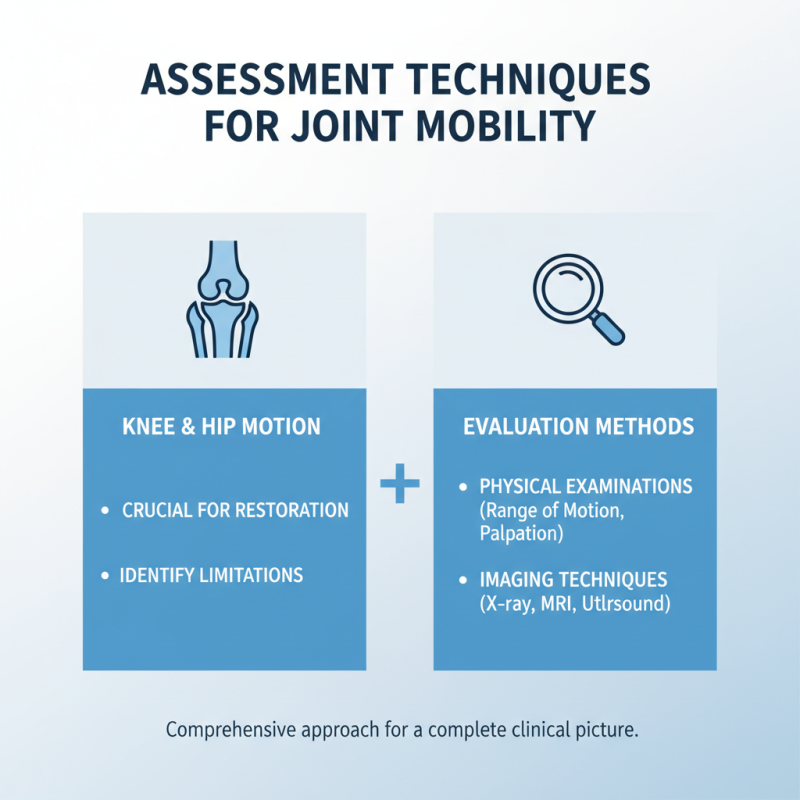
Assessing joint mobility is crucial for restoring knee and hip motion. Effective evaluation methods help identify specific limitations. Clinicians can use a combination of physical examinations and imaging techniques to gain a complete picture.
Physical assessments often begin with a range of motion tests. Patients may perform various movements while the clinician observes. This hands-on approach highlights areas of stiffness or weakness. Gait analysis can also provide insights. Watching how a patient moves can reveal compensatory patterns. These observations are valuable for formulating an effective rehabilitation plan.
Imaging techniques like X-rays and MRIs play a key role. They offer a deeper understanding of joint structures. However, they should complement physical assessments, not replace them. An over-reliance on imaging can lead to misinterpretations. Balancing both methods ensures a comprehensive evaluation. Successful restoration of knee and hip function requires attentive, multifaceted assessments.
Rehabilitation exercises play a vital role in restoring knee and hip function. These joints are crucial for mobility. Strengthening them can prevent further injuries. Effective exercises are essential for recovery.
One effective exercise is the straight leg raise. Lying flat, keep one knee bent. Raise the opposite leg slowly. This targets the quadriceps and hip flexors. It’s important to engage the core during this exercise. Another beneficial move is the bridge. Lying on your back with knees bent, lift your hips. This strengthens the glutes and hamstrings. These exercises are simple yet powerful.
Listening to your body is essential. Pain is a signal to stop. Progress may be slow, and that’s okay. Adapting exercises to your level matters. Consistency is key. However, it’s important to consult with a healthcare professional. They can provide guidance tailored to your needs. Create a routine that fits your lifestyle. Small steps lead to significant changes over time.
In recent years, innovative therapies and technologies have emerged to effectively restore knee and hip motion. A report from the World Health Organization highlights that joint disorders affect over 30% of adults. This statistic underscores the urgency for effective treatment solutions.
Regenerative medicine, such as platelet-rich plasma (PRP) therapy, has shown promise. Studies reveal that PRP can accelerate tissue healing. Research indicates patients often experience significant pain relief within weeks. However, data also suggests variability in outcomes. Not every patient responds equally to this treatment. This inconsistency raises questions about its universal effectiveness.
Another breakthrough is the use of wearable technology. Devices that monitor joint movements can help track progress. A recent study found that 75% of users reported improved awareness of their joint function. Yet, these technologies must be integrated thoughtfully into rehabilitation programs. Without proper guidance, patients may misinterpret the data. Thus, combining technology with expert supervision can enhance rehabilitation outcomes. Emphasizing a patient-centered approach remains essential in motion restoration efforts.