What Are China Top Medical Alert Suppliers?
Choosing dependable China top Medical Alert suppliers requires more than comparing factory prices or product photographs. A reliable supplier should demonstrate practical experience with emergency pendants, fall detection devices, GPS trackers, and home-based monitoring systems. It should also explain how alerts move from the device to caregivers, call centers, or emergency contacts. Small details matter, including battery duration, waterproof protection, speaker clarity, charging design, and response speed.
Dr. Mary Tinetti, a respected falls researcher, has stated, “Falls are not an inevitable consequence of aging.” Her observation gives this market a useful direction. Medical Alert equipment should support independence without creating unnecessary anxiety. Therefore, buyers should examine product testing, software stability, data protection, manufacturing controls, and after-sales support. Suppliers with transparent documentation are easier to evaluate. Clear communication matters too.
The strongest Chinese suppliers may offer customization, multilingual applications, private-label manufacturing, and flexible order quantities. However, claims still require verification. A polished website proves little. Ask for sample units, quality records, firmware update policies, and realistic delivery timelines. Test the SOS button in a quiet room, then test it near walls and outdoors. Results may differ.
That difference deserves attention.
No supplier is perfect, and even a well-designed device can fail through poor setup, weak cellular coverage, or user confusion. This article will examine leading China Medical Alert suppliers through product capability, reliability, service experience, and buyer confidence. The goal is not to praise the cheapest option. It is to identify partners that perform consistently when a real alert cannot wait.
What Are Medical Alert Systems and How Do They Work?
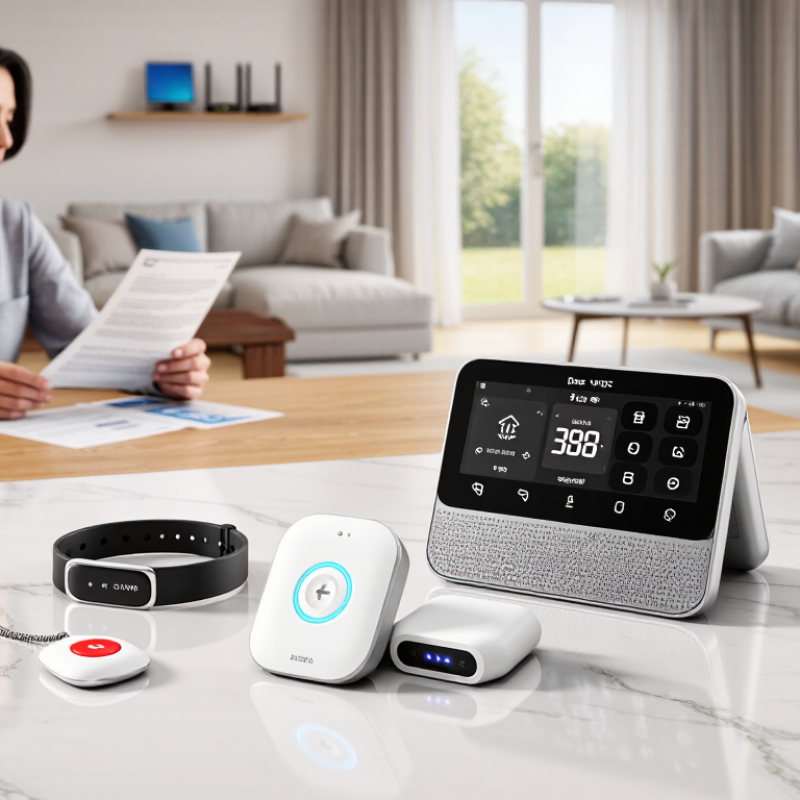
Medical alert systems help older adults, people living alone, and patients request assistance quickly. They usually combine a wearable pendant, a base unit, and a monitoring service. The pendant may include a large help button, microphone, speaker, fall detection, or location tracking. When the button is pressed, the device sends an alert through a cellular or home internet connection. The base unit then creates a two-way voice link with a response center. That small delay matters.
In a typical emergency, a trained responder speaks through the device and checks the user’s condition. The responder may contact a family member, caregiver, local emergency service, or another approved contact. Automatic fall detection can help when someone cannot reach the button, but it is not perfect. A slow fall, a blocked sensor, or a low battery may prevent detection. Real homes are messy. Furniture, walls, and weak signals can affect performance.
When comparing China’s top medical alert suppliers, buyers should examine testing records, response procedures, battery warnings, waterproof ratings, and after-sales support. Reliable suppliers should explain how devices are tested and how user information is protected. Practical home trials are valuable because advertised range may differ from real indoor coverage. I would test the pendant from a bathroom, bedroom, and outdoor doorway. No device removes every risk. Supplier documentation should acknowledge that limitation clearly.
Which Types of Medical Alert Products Are Made in China?
China’s medical alert suppliers make more than emergency pendants. Common products include wristbands, necklaces, home SOS consoles, and mobile GPS units. Many models combine two-way voice communication with cellular connectivity. Some also include fall detection, geofencing, and low-battery alerts.
Home-based systems often connect to door sensors, bed-exit sensors, smoke alarms, and medication reminders. Caregivers can receive alerts through mobile applications or web dashboards. Wearable devices usually use waterproof housings and large, tactile buttons. China-based factories commonly provide OEM and ODM production, including enclosure design, firmware adjustment, packaging, and small-batch customization. However, a polished enclosure does not prove dependable detection. This is where buyers may judge too quickly.
The United Nations World Population Prospects 2022 projects people aged 65 and older will reach 16% of the global population by 2050, up from 10% in 2022. Fortune Business Insights estimated the medical alert systems market at about 9 billion US dollars in 2023. These figures support demand for simpler, connected safety devices. Yet market estimates vary by product definition.
Tips: Check fall-detection testing, voice clarity, battery endurance, IP ratings, data-security controls, and local network compatibility. Ask for real test records, not only factory photographs. Also verify whether the device supports manual SOS calls when automatic detection fails. No device catches every fall. That limitation deserves clear user training.
Who Are the Leading Medical Alert Suppliers in China?
China’s leading medical alert suppliers are usually specialized OEM and ODM manufacturers, not consumer-facing brands. They produce SOS pendants, fall-detection watches, GPS trackers, and indoor emergency call units. Many also provide cloud platforms, SIM management, mobile applications, and multilingual technical support. This integrated approach helps distributors deploy devices in nursing homes, private residences, and community care centers.
Demand is becoming more measurable. China’s National Bureau of Statistics reported that people aged 60 and above represented 21.1% of the population in 2023. The World Health Organization also expects one in six people worldwide to be over 60 by 2030. Meanwhile, Grand View Research estimates that the global personal emergency response systems market will grow at about 6.9% annually from 2024 to 2030. These figures explain why Chinese suppliers increasingly emphasize LTE connectivity, long battery life, waterproof casings, and 24-hour response coordination.
The strongest suppliers should demonstrate ISO 9001 quality systems and, where applicable, ISO 13485 processes. Buyers should also verify destination-market testing, data protection controls, warranty terms, and replacement procedures. A practical test involves wearing the device indoors, outdoors, and during weak-signal conditions. Small details matter. A delayed alert, unclear voice prompt, or difficult charging dock can undermine an otherwise capable system. Supplier rankings remain imperfect because export volume does not always prove service reliability. Independent sample testing and customer references still deserve greater weight.
How Can Buyers Evaluate China’s Medical Alert Manufacturers?
What Are China Top Medical Alert Suppliers?
How Can Buyers Evaluate China’s Medical Alert Manufacturers?
Evaluating a Chinese medical alert manufacturer requires more than comparing unit prices. Buyers should inspect factory experience, engineering records, and quality procedures. Ask how long the facility has produced emergency call devices. Request production photos, sample inspection reports, and testing records. A reliable supplier should explain its process clearly.
Test the device in realistic conditions. Walk through several rooms with the pendant or wrist button. Check response time, speaker clarity, battery performance, and waterproof protection. Simulate a weak network connection. Ask whether alerts reach caregivers through cellular, Wi-Fi, or another approved system. Small delays may become serious during an actual emergency.
Review certifications for the destination market, not only general factory certificates. Confirm traceability for batteries, circuit boards, and finished units. Ask how the manufacturer handles software updates, complaints, and defective products. An on-site or third-party audit can reveal crowded storage areas, poor labeling, or inconsistent inspection habits. However, one successful audit does not prove lasting quality. Suppliers can improve temporarily before inspection. Buyers should repeat checks and document every requirement in writing.
Do not ignore communication. Technical answers should be specific. “We can manage it” is not enough. Request measurable limits, test methods, and delivery records. A lower quotation may hide tooling fees, app maintenance costs, or replacement expenses. This part is often overlooked. It should not be.
How Buyers Can Evaluate China’s Medical Alert Manufacturers
Recommended procurement weighting for comparing medical alert suppliers
This evaluation model prioritizes regulatory compliance, quality management, device reliability, software and cybersecurity controls, monitoring capability, customization, and after-sales support. Buyers should verify evidence such as ISO 13485 quality-system certification, ISO 14971 risk management, applicable IEC 60601 requirements, software lifecycle controls under IEC 62304, usability engineering under IEC 62366-1, test reports, production records, and service-level agreements. The percentages are a transparent procurement framework rather than market-share data or claims about any individual supplier.
What Certifications and Services Should a Reliable Supplier Provide?
A reliable medical alert supplier should provide certifications that match the device and target market. ISO 13485 shows a quality system designed for medical devices. ISO 9001 supports consistent production and documented process control. Depending on the market, suppliers may also need CE, FCC, RoHS, or other approved conformity records. Ask for certificates with valid dates, issuing bodies, and matching factory details. A certificate with a different company name deserves careful questioning.
Testing evidence should cover the real product, not only a similar model. Request reports for battery safety, electromagnetic compatibility, durability, water resistance, and wireless performance. Data protection also matters when devices transmit emergency contacts or location information. Reliable suppliers should explain how user data is stored, accessed, and deleted. This explanation must be clear enough for a non-engineer to understand.
Service quality often reveals more than a sales presentation. The supplier should offer samples, technical documents, installation guidance, firmware support, and training for operators. A written warranty should define repair timelines, replacement rules, and spare-part availability. Ask whether each unit has a serial number and production record. That detail helps investigate faults later. In my experience, response speed matters during testing, but it is not enough. Some suppliers answer quickly and still provide weak documents. A factory audit, sample inspection, and small pilot order can expose that weakness before larger purchasing decisions.


