



Why Choose ENT Medical Equipment for Your Clinic?

Choosing the right Ent Medical Equipment can shape every consultation, from the first patient greeting to post-treatment follow-up. In a busy clinic, equipment must support clear examination, safe procedures, and confident clinical decisions. A reliable otoscope, endoscope, suction unit, or treatment chair is more than a purchase. It becomes part of the daily workflow. Small details matter. Smooth controls reduce interruptions. Bright, accurate lighting reveals subtle tissue changes. Comfortable positioning can ease anxiety for both patients and clinicians.

Experienced ENT teams usually assess equipment through practical use, not attractive specifications alone. They consider image quality, sterilization requirements, ergonomic design, repair access, and staff training. A device may perform well during a demonstration yet feel awkward after several hours of consultations. That assumption can fail. Clinicians should review manufacturer documentation, applicable safety standards, warranty terms, and service records before committing. Independent clinical guidance can also help identify features that genuinely improve diagnosis or treatment.

No device is perfect. Budget limits, room size, patient volume, and staff experience all influence the best choice. A compact examination system may suit a small practice, while a hospital department may need advanced imaging and stronger integration. Careful evaluation reduces wasted investment and supports consistent patient care. Still, technology cannot replace clinical judgment. It should make good practice easier, not pretend to make decisions alone. With documented maintenance, responsible training, and honest feedback from users, Ent Medical Equipment can become a dependable foundation for a safer, more efficient ENT clinic.
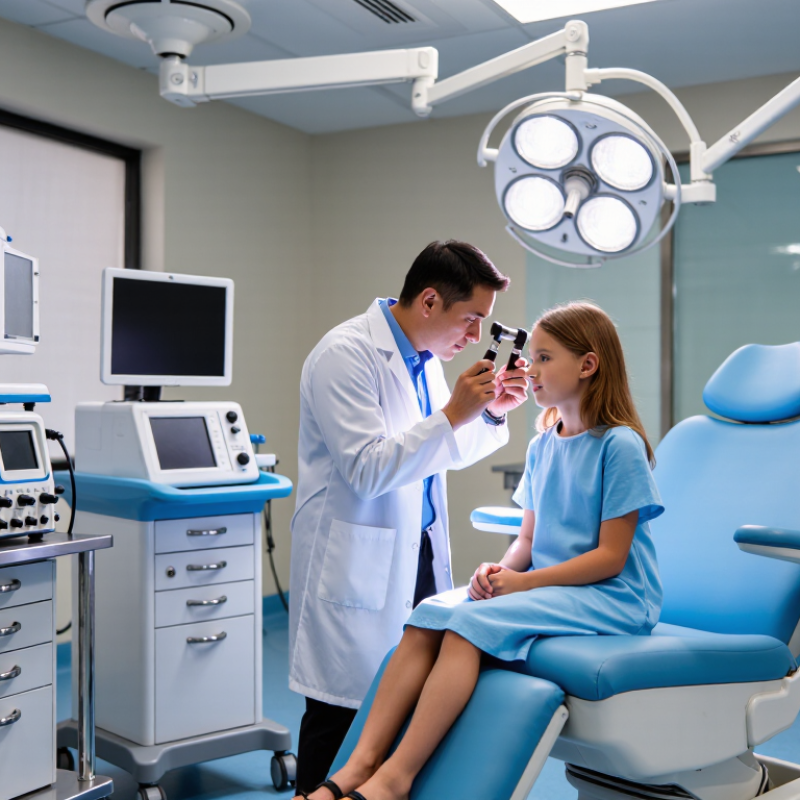
Why Choose ENT Medical Equipment for Your Clinic?

Assessing ENT Demand: WHO Reports 1.5 Billion People With Hearing Loss

Why Choose ENT Medical Equipment for Your Clinic?

The World Health Organization reports that more than 1.5 billion people live with hearing loss worldwide. Its World Report on Hearing also projects that this number could reach 2.5 billion by 2050. Around 430 million people currently need rehabilitation services, including hearing assessment and communication support. These figures show significant demand for ENT services, even in clinics that do not consider themselves hearing specialists.

The number is powerful, but it is not a complete local forecast. Patient age, occupational noise, childhood infections, and access to healthcare can change regional demand. A clinic needs equipment that supports accurate, repeatable examinations. A calibrated audiometer can measure hearing thresholds, while tympanometry helps assess middle-ear function. An otoscope with clear illumination can reveal wax, inflammation, or visible membrane changes. Small details matter.

WHO emphasizes that timely identification can reduce the impact of hearing loss. In practice, this means a quiet testing room, documented calibration, and trained staff are as important as the devices themselves. Infection-control procedures also protect patients during repeated examinations. The Global Burden of Disease Study 2019, published in The Lancet, identified hearing loss as one of the leading causes of years lived with disability. That evidence supports wider diagnostic capacity, but it does not remove uncertainty. Some clinics may overinvest in advanced tools while overlooking basic workflow problems. Equipment should match patient volume, clinical skills, referral pathways, and maintenance resources. Calibration records must stay current. Mistakes still happen.

Why Choose ENT Medical Equipment for Your Clinic?

Assessing ENT Demand: Global Hearing Loss Population and Rehabilitation Needs

According to the World Health Organization, more than 1.5 billion people currently live with hearing loss, including approximately 430 million people who require rehabilitation services. By 2050, nearly 2.5 billion people are projected to have some degree of hearing loss, with around 700 million expected to require rehabilitation. This growing need highlights the importance of accessible ENT diagnostic, treatment, and hearing-care equipment.

Source: World Health Organization, World Report on Hearing and global hearing-loss fact sheets. Values are rounded estimates.

Matching Equipment to Need: 430 Million Require Hearing Rehabilitation

An estimated 430 million people worldwide require hearing rehabilitation for disabling hearing loss. This figure changes how clinics should choose ENT medical equipment. Need must lead. A clinic serving older adults may require calibrated pure-tone audiometers, speech audiometry, and immittance testing. These tools help identify conductive, sensorineural, and mixed hearing loss.

Children need a different setup. Visual reinforcement systems can keep young patients engaged during testing. Quiet rooms, child-sized headphones, and reliable screening protocols also matter. Ear examination equipment, including otoscopes and endoscopic systems, can reveal wax blockage, fluid, inflammation, or structural concerns. Each result should support an appropriate referral, treatment plan, or rehabilitation pathway.

Equipment quality involves more than technical specifications. Regular calibration, documented maintenance, and trained operators protect test accuracy. A small calibration error may influence a major clinical decision. It is tempting to purchase the most advanced system, but unused features waste space and budget. I have seen how rushed testing creates confusing results. Clinics should review patient age, referral patterns, room conditions, and staff skills before purchasing. No device is perfect. Clear records and repeat testing remain essential when findings do not match the patient’s daily experience.

Building the Diagnostic Workflow: Endoscopy, Audiometry, and Tympanometry

Why Choose ENT Medical Equipment for Your Clinic?

Building a reliable ENT workflow starts with clear clinical questions, not a crowded equipment room. Endoscopy can reveal nasal obstruction, vocal-fold changes, inflammation, or lesions during a focused examination. A high-resolution image, adjustable lighting, and simple recording controls help clinicians compare findings over time.

Reprocessing must remain visible in the workflow. CDC guidance classifies flexible endoscopes as semicritical devices requiring appropriate cleaning and high-level disinfection.

Audiometry adds functional evidence. Pure-tone testing measures hearing thresholds across key frequencies, while speech testing shows how patients understand everyday communication.

The World Health Organization reports that over 1.5 billion people live with hearing loss globally. This number may reach 2.5 billion by 2030 (WHO, World Report on Hearing, 2021).

Quiet rooms, calibrated transducers, and documented test conditions protect result reliability. Small room noise can distort borderline thresholds. That detail is easy to miss.

Tympanometry examines middle-ear mechanics through pressure and compliance measurements. It can support assessment of effusion, eustachian tube dysfunction, or ossicular problems.

A practical sequence links visual findings with hearing and pressure data: examine, test, compare, then decide whether referral or follow-up is needed.

Calibration should follow relevant technical standards, including IEC 60645-5 for tympanometric equipment and ISO 8253-1 for audiometric testing.

No workflow is perfect. Staff training, maintenance logs, and patient cooperation still influence every result. Reviewing failed tests is uncomfortable, but often useful.

Verifying Safety and Quality: FDA Clearance and ISO 13485 Certification

Choosing ENT equipment should begin with evidence, not polished appearance. FDA clearance shows that a device meets applicable regulatory requirements. Under the 510(k) pathway, it generally demonstrates substantial equivalence to an existing device. It does not guarantee perfect clinical performance. The FDA’s FY 2023 CDRH reporting recorded more than 3,000 510(k) clearances. That volume makes careful verification essential. Check intended use, warnings, accessories, and cleaning instructions before purchase.

ISO 13485 certification evaluates a manufacturer’s quality management system. It covers design controls, supplier oversight, traceability, corrective actions, and complaint handling. The ISO Survey 2022 recorded 31,620 ISO 13485 certificates worldwide. This figure shows broad industry adoption, but certification is not product approval. A certificate can also have a limited scope. Verify its validity, covered facilities, and certification boundaries. Paperwork can still hide weak training.

A practical clinic review should examine labeling, sterilization records, calibration evidence, and service intervals. Ask how failures are reported and investigated. WHO’s Global Patient Safety Action Plan states that about one in ten patients experiences harm in healthcare, with more than half considered preventable. That is sobering. A remaining weakness is easy to miss: teams may trust certificates without testing usability. Observe setup, alarm visibility, handpiece comfort, and cleaning time. FDA clearance and ISO 13485 certification matter most when they match daily clinical reality.

Why Choose ENT Medical Equipment for Your Clinic? - Verifying Safety and Quality: FDA Clearance and ISO 13485 Certification

Verification Dimension Relevant Requirement or Evidence What It Indicates for an ENT Clinic Important Limitation
FDA 510(k) clearance A premarket notification submitted under 21 CFR Part 807, Subpart E, when applicable. The device has been found substantially equivalent to a legally marketed predicate device for its stated intended use. Clearance is not the same as FDA approval and does not guarantee clinical outcomes for every patient or use.
FDA product classification Classification depends on the device type, intended use, risk profile, and applicable FDA regulations. Helps the clinic confirm that the equipment is legally marketed for the intended ENT application. Not every medical device requires a 510(k); some products may follow another pathway or may not be regulated as medical devices.
Intended-use statement The labeling should define the device’s intended purpose, target users, patient population, and operating conditions. Supports appropriate selection for examinations, diagnosis, treatment, monitoring, or visualization in ENT practice. A device should not be used outside its cleared or labeled intended purpose without appropriate clinical, regulatory, and risk review.
ISO 13485:2016 certification Certification to the ISO 13485:2016 quality-management-system standard by an independent certification body. Indicates that the certified organization operates documented processes for design, production, quality control, and continual improvement. ISO 13485 certification is not approval or clearance of a specific device and does not replace local regulatory requirements.
Risk management ISO 14971:2019 provides a recognized framework for identifying hazards, estimating and controlling risks, and monitoring residual risks. Encourages systematic control of risks related to electrical energy, heat, illumination, infection, software, and incorrect use. Risk management reduces risk but cannot eliminate every hazard or guarantee zero adverse events.
Electrical and equipment safety Applicable electrical-safety and electromagnetic-compatibility evidence should be available where relevant to the device. Helps reduce hazards such as electric shock, overheating, interference, and unexpected equipment behavior. The clinic must still follow installation, grounding, inspection, maintenance, and cleaning instructions.
Reprocessing and infection control The manufacturer’s labeling should specify cleaning, disinfection, sterilization, reuse limits, and compatible chemicals when applicable. Supports safe handling of ENT accessories and reusable components that may contact mucous membranes or non-intact skin. Using an unvalidated method or incompatible chemical can damage equipment and compromise infection control.
Quality records and traceability Quality systems commonly include lot or serial-number traceability, complaint handling, corrective actions, and change-control records. Makes it easier to investigate failures, manage recalls, document maintenance, and protect patients and staff. A certificate or document should be checked for its scope, validity period, issuing body, and covered site or product category.
Post-market monitoring Manufacturers are expected to address complaints, incidents, field corrections, and other post-market quality information as applicable. Provides an ongoing safety feedback mechanism after equipment enters clinical service. Clinics should report suspected device problems through the appropriate regulatory and manufacturer channels.

Verification note: FDA clearance, ISO 13485 certification, device labeling, and applicable national requirements should be reviewed together before purchasing or using ENT medical equipment.

Evaluating Clinic Value: Uptime, Service Life, and Total Ownership Cost

Why Choose ENT Medical Equipment for Your Clinic?

In clinic planning, uptime often matters more than the lowest purchase price. A failed suction unit during a busy morning can delay examinations, frustrate patients, and increase staff pressure. Reliable ENT equipment should support steady workflows, simple cleaning, and quick access to replacement parts. Ask suppliers for documented service intervals, response times, and repair procedures. Marketing promises are not enough.

Service life also deserves careful review. A durable examination chair, endoscope, or treatment light may serve for years when used correctly and maintained consistently. However, heavy daily use can expose weak hinges, worn cables, or outdated software sooner than expected. Warranty length does not equal useful life. Review maintenance logs, training needs, consumable costs, and compatibility with future upgrades. Some estimates may look too optimistic.

Tips: Calculate total ownership cost before approval. Include installation, staff training, preventive maintenance, repairs, consumables, energy use, downtime, and eventual replacement. Compare the cost of one hour of lost clinic capacity with the cost of planned servicing. Choose equipment with clear documentation and accessible technical support. Ask for references from clinics with similar patient volumes. A cheaper device can become expensive when small failures interrupt every appointment.

volume-unmute-yellow-icon volume-unmute-blue-icon
