Companies




Browse products by medical specialities area or therapies

Arthroplasty
Product by Therapies
Product by Type
Sports Medicine
Product by Therapies
Knee Portfolio - ACL /PCL Reconstruction
Knee Portfolio - Meniscus Repair
Shoulder Portfolio - Bankart/Slap Repair
Shoulder Portfolio - Rotator Cuff Repair
Product by Type


Why Choose PEEK Suture Anchor Solutions? The answer starts with the demands of the repair, not the material alone. PEEK suture anchor solutions are designed to secure sutures in bone during soft-tissue procedures, with product options suited to different surgical approaches. PEEK is radiolucent, which can help clinicians assess surrounding bone on certain imaging studies. That matters. Anchor design, however, still influences insertion, fixation, and compatibility with the intended technique.
Surgeons and care teams weigh practical details: the patient’s bone quality, the repair site, the required suture configuration, and the manufacturer’s instructions. A well-chosen anchor must also fit the surgeon’s workflow. Small differences count. Still, no material guarantees a successful repair; outcomes depend on many factors, including placement, tissue condition, rehabilitation, and clinical judgment. This overview examines the potential advantages of PEEK, key design and selection considerations, and questions worth asking when comparing available solutions. It also recognizes a limitation: material descriptions alone cannot establish how an individual device will perform in a specific patient. Clear product documentation and evidence-informed decision-making remain essential.
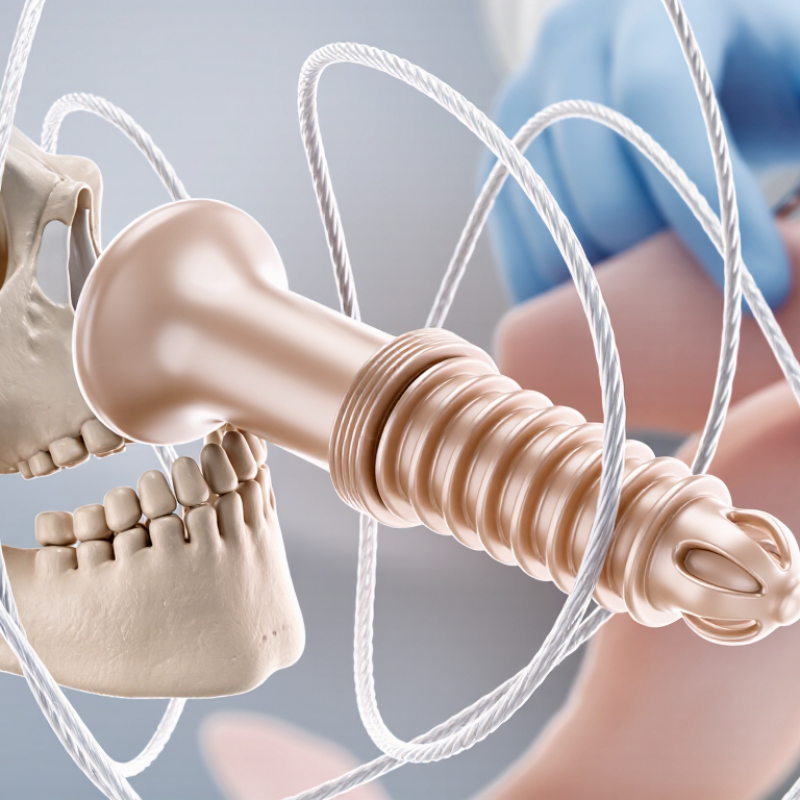
A PEEK suture anchor is a small implant used to secure sutures to bone during soft-tissue repair. PEEK stands for polyetheretherketone, a high-performance thermoplastic. The anchor’s body is placed in a prepared bone socket; sutures pass through or attach to its eyelet to hold tissue in position. Not a metal screw.
PEEK is often selected because it is strong, lightweight, and largely radiolucent on standard X-rays. Kurtz and Devine’s 2007 review in Biomaterials reports an elastic modulus of about 3.6 GPa for unfilled PEEK. That is a material property, not a guarantee of an anchor’s clinical performance. Design, insertion technique, bone quality, and healing all matter. The distinction is easy to overlook.
Because PEEK is radiolucent, the implant may be less conspicuous on X-rays than a metal anchor. It is not invisible in every imaging context, and some devices may include radiopaque features. Surgeons assess imaging needs alongside the repair plan. PEEK does not remove the need for secure fixation or follow-up. Its advantages are useful, but they are not universal.
| Feature | PEEK Suture Anchor | Practical Consideration |
|---|---|---|
| What it is | An implant made primarily from polyether ether ketone (PEEK), a high-performance engineering thermoplastic, designed to secure sutures to bone. | Anchor design, insertion method, and compatible sutures vary by device. |
| Imaging characteristics | PEEK is radiolucent on standard X-rays compared with metal, so the polymer itself is generally less conspicuous on radiographs. | Some anchor designs include radiopaque markers or other components. Imaging appearance depends on the complete device and imaging method. |
| Resorption | Conventional PEEK is non-bioresorbable and is intended to remain in the body rather than gradually dissolve. | This differs from resorbable polymer anchors. Follow-up and implant decisions should be based on the specific device and clinical circumstances. |
| Mechanical profile | PEEK provides a rigid, durable anchor material and has a lower elastic modulus than commonly used metallic implant materials such as titanium. | Fixation strength is not determined by material alone; anchor geometry, bone quality, placement, and surgical technique also matter. |
| Bone interaction | Standard, unmodified PEEK is generally considered bioinert and does not inherently resorb or bond to bone like a bioactive material. | Surface treatments and porous designs can differ. Check the device specifications rather than assuming all PEEK anchors have the same surface. |
| Common use | PEEK anchors are used in orthopedic soft-tissue-to-bone repair procedures, including selected tendon and ligament repairs. | Suitability depends on the repair, patient factors, bone quality, and the surgeon’s assessment. |
| Potential advantages | Radiolucency, durable non-resorbable construction, and a material option that avoids a fully metallic anchor body. | These characteristics may be useful in selected cases, but they do not establish that PEEK is preferable for every procedure. |
| Key limitations | PEEK does not disappear through resorption, and the material alone does not guarantee bone integration or successful healing. | Review the product’s instructions for use, imaging details, contraindications, and compatibility requirements. |
Note: This table provides general material information, not medical advice. Implant composition and performance characteristics vary among devices; consult the applicable instructions for use and a qualified healthcare professional.