5 Best Patient Focused Implant Design Options?
Choosing an implant is not only a technical decision. It is a personal one, shaped by anatomy, movement, comfort, recovery, and daily expectations. Patient-focused implant design begins with these lived details, not with a catalogue of materials.
Dr. Don Norman, a leading authority on human-centered design, explains, “Design is really an act of communication, which means having a deep understanding of the person with whom the designer is communicating.” His principle matters in implant development. A successful device must communicate with the body, the surgeon, and the patient’s practical needs. That requires more than attractive engineering. It requires clinical evidence, careful risk assessment, biocompatible materials, and honest conversations about limitations.
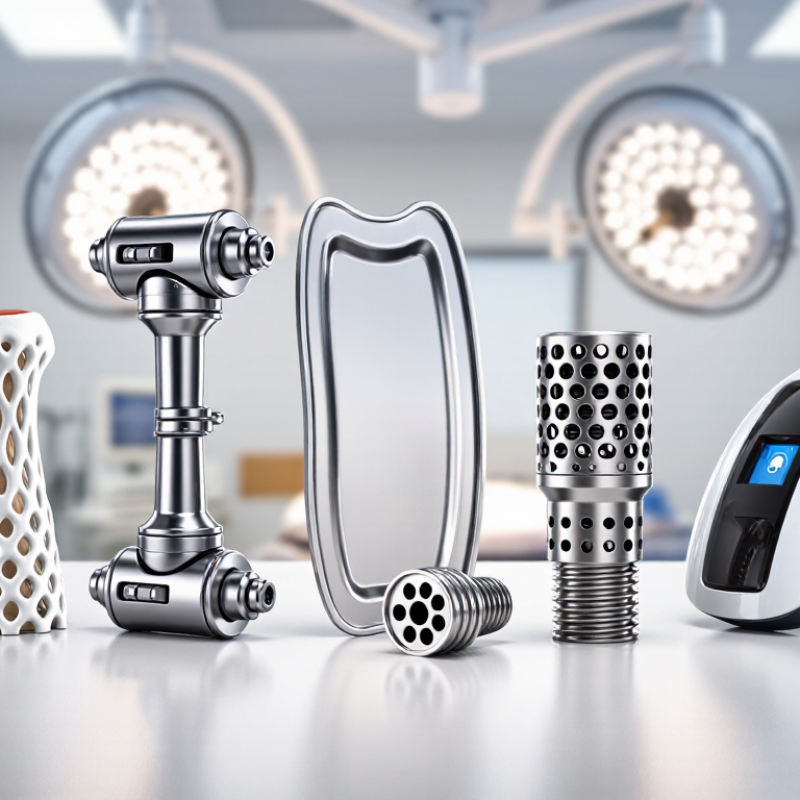
This guide examines five promising implant design options. They include patient-specific 3D-printed structures, modular implants, low-profile devices, porous surfaces that support bone integration, and implants with monitoring capabilities. Each option offers a different answer to a familiar problem: poor fit, restricted movement, discomfort, revision surgery, or uncertain recovery.
The details can be surprisingly physical. A few millimeters may affect gait, grip strength, or clothing comfort. A roughened surface may encourage fixation, but it can also complicate removal. Smart features sound impressive. They may add maintenance concerns.
No implant is perfect.
The strongest choice depends on the patient, procedure, evidence, and clinical judgment. Some designs remain experimental or require longer follow-up. That uncertainty deserves attention. Patient-focused implant design should improve care without hiding its compromises.
Understanding Patient-Focused Implant Design
Patient-focused implant design begins with the person, not the device. Understanding Patient-Focused Implant Design means considering anatomy, daily habits, age, movement, and recovery expectations. The five strongest options include custom-fit implants, porous structures for bone integration, adjustable components, minimally invasive profiles, and digitally planned systems. Each option should answer a practical question: Will this implant feel stable when the patient walks, chews, or climbs stairs?
Evidence supports this careful approach. The National Joint Registry’s 21st Annual Report (2024) contains data from more than three million hip and knee procedures, showing why long-term revision tracking matters. Implant geometry, fixation, and patient activity can influence later outcomes. In oral care, the World Health Organization’s Global Oral Health Status Report (2022) estimates that severe periodontal disease affects more than one billion people worldwide. Bone quality and infection control therefore deserve equal attention during dental implant planning.
Good design also requires honest discussion. A smaller implant is not automatically better. A complex custom implant may improve fit, yet increase cost and planning time. I have seen how a technically elegant solution can feel unsuitable when patients receive unclear instructions. Digital scans help, but they do not replace clinical judgment. Patient-focused design should include readable consent materials, realistic recovery timelines, and follow-up data from independent registries. The best option is not always the newest one. Sometimes, it is the design patients can understand, maintain, and trust.
Comparing Implant Materials for Comfort and Safety
5 Best Patient Focused Implant Design Options?
Implant material affects comfort, strength, tissue response, and long-term maintenance. Titanium alloy remains widely studied and offers strong bone integration. Its light weight supports smaller designs. Some patients, however, worry about metal sensitivity or visible shadows near thin gum tissue. Zirconia provides a metal-free option with a tooth-like appearance. It can suit carefully selected patients, though its fracture risk and long-term evidence require honest discussion.
PEEK has a flexibility closer to bone than many metals. That property may help manage stress around certain orthopedic implants. Its surface usually needs special treatment to encourage stable bone attachment. Porous titanium uses tiny spaces to support tissue growth. The design can reduce implant stiffness, but pores also demand precise manufacturing and careful cleaning. Ceramic-coated metal may combine a strong inner structure with a smoother, more natural-looking surface. Coatings can wear or separate, so follow-up remains important.
Comfort is not decided by material alone. Implant shape, surgical technique, bone quality, healing habits, and daily hygiene also matter. A patient with limited bone may need a different design than someone with dense bone. Medical history, allergies, imaging, and realistic expectations should guide the choice. No material is perfect. That is easy to forget. Even well-supported options can produce discomfort, inflammation, or revision surgery. A qualified clinician should explain the evidence, uncertainties, and alternatives before treatment. Patient questions deserve clear answers, not promises.
This comparison uses representative engineering values for implant materials. PEEK has the lowest elastic modulus and density, which may help reduce implant weight and stiffness mismatch. Titanium alloys provide a balance of strength, relatively low density, and established biocompatibility. Zirconia, cobalt-chromium, and stainless steel offer higher stiffness but are also denser. Actual comfort and safety depend on implant geometry, surface treatment, fixation method, manufacturing quality, and the patient’s clinical condition.
Evaluating Customization and Anatomical Fit
5 Best Patient Focused Implant Design Options?
Evaluating Customization and Anatomical Fit
Patient-focused implant design begins with anatomy, not a catalogue size. The strongest options include patient-specific 3D-printed implants, customized CAD/CAM components, modular systems, porous fixation surfaces, and adjustable designs. Each option addresses different bone shapes, tissue conditions, and movement demands. The American Academy of Orthopaedic Surgeons reports more than one million joint replacements annually in the United States. That volume makes fit and long-term function important clinical decisions.
Patient-specific imaging can reveal narrow bone channels, asymmetry, or unusual angles before surgery. A customized component may reduce unnecessary bone removal and improve load distribution. Porous surfaces can support bone integration, but biological response varies between patients. Modular designs offer flexibility during surgery, although extra interfaces may increase complexity. The FDA emphasizes careful risk assessment for patient-matched devices. Customization sounds precise. It is not automatically better. Poor imaging, weak planning, or unrealistic expectations can still produce an imperfect result.
Tips: Compare CT or MRI planning with physical examination findings. Ask how much bone the design preserves. Review fixation, revision, and rehabilitation data. Confirm that the surgical team has experience with the chosen design. Industry reports often highlight market growth, but growth does not equal clinical superiority. Track patient-reported pain, mobility, and function after implantation. Those outcomes matter more than impressive engineering language.
Reviewing Surgical Access and Recovery Features
5 Best Patient-Focused Implant Design Options?
Reviewing Surgical Access and Recovery Features
Patient-focused implant design begins with surgical access. A tapered implant may enter dense bone through a narrower osteotomy. This can reduce unnecessary bone removal in suitable cases. A shorter implant may help when vertical bone height is limited. However, shorter does not always mean simpler. Bone quality, anatomy, and bite forces still guide selection.
A platform-switched design can help preserve space around the crestal bone. Some implants also use surface treatments that support early bone integration. These features matter only when placement is precise and healing conditions are stable. The surgeon may use 3D imaging before surgery to check nerves, sinuses, and available bone. Small details matter.
Recovery is shaped by more than the implant itself. A minimally traumatic approach may reduce soreness and swelling for some patients. Smooth healing components can make cleaning easier during follow-up visits. A patient may need soft foods, careful brushing, and limited chewing near the site. Healing still takes time. Faster is not always better.
I have seen how recovery expectations influence satisfaction. A patient who expects mild discomfort may feel anxious when swelling peaks on day two. Clear instructions and accessible follow-up can prevent avoidable problems. No design fits every mouth. The best choice balances surgical visibility, stability, hygiene, and the patient’s daily routine. That balance deserves honest discussion.
5 Best Patient Focused Implant Design Options? - Reviewing Surgical Access and Recovery Features
| Implant Design Option |
Typical Patient Use |
Surgical Access |
Potential Recovery Advantages |
Important Limitations |
Typical Healing Considerations |
Standard-Diameter Threaded Implant
Usually placed in healed bone
|
Patients with adequate bone volume and a single missing tooth or a conventional fixed restoration
|
Requires a planned surgical site and, in some cases, flap reflection. Bone grafting may be needed when width or height is insufficient.
|
Predictable placement when bone quality and quantity are favorable; established restorative compatibility
|
May require additional procedures if bone has resorbed; treatment can take longer when graft healing is necessary
|
Osseointegration commonly takes several weeks to a few months before final loading, depending on site and stability
|
Tapered Implant
Root-form geometry with a narrower apical profile
|
Patients with limited space, extraction sites, or anatomy where a tapered shape may follow the available bone
|
Can support a site-specific osteotomy and may be useful where the ridge narrows toward the apex; access is still determined by anatomy and clinician technique
|
May improve primary stability in selected extraction or softer-bone sites, which can help treatment planning
|
Excessive insertion torque or improper positioning can increase surgical and biological risks; not suitable for every bone shape
|
Healing time remains dependent on stability, infection control, bone quality, loading protocol, and patient health
|
Short Implant
Reduced implant length for selected sites
|
Patients with reduced vertical bone height, especially in posterior jaw regions, when vital structures limit available space
|
May avoid or reduce the need for vertical bone augmentation in carefully selected cases
|
Potentially less invasive treatment when it eliminates an additional grafting procedure; may reduce surgical visits
|
Requires adequate ridge width and careful control of occlusal forces; unfavorable loading or poor bone quality may reduce predictability
|
Healing and loading decisions should be based on insertion stability and site-specific risk rather than implant length alone
|
Narrow-Diameter Implant
Smaller diameter for restricted mesiodistal or ridge width
|
Patients with narrow ridges or limited space between adjacent teeth, commonly in selected anterior tooth sites
|
May allow less ridge expansion or avoid grafting when the available bone can safely accommodate the implant
|
Smaller osteotomy and fewer augmentation requirements may reduce postoperative swelling and treatment burden in suitable cases
|
Lower mechanical reserve than wider implants; case selection is critical in areas exposed to high chewing forces
|
Soft-tissue management, hygiene access, and protection from excessive early loading remain important during healing
|
Immediate-Placement Implant
Placed at the time of tooth extraction when conditions permit
|
Patients with a non-restorable tooth, intact or manageable extraction socket, and sufficient bone for primary stability
|
Combines extraction and implant placement in one surgical episode; grafting or membrane use may still be required
|
May shorten the overall treatment pathway and help preserve the contour of the extraction site when properly planned
|
Not appropriate for uncontrolled infection, inadequate primary stability, major socket-wall loss, or unfavorable anatomy
|
A temporary restoration may be possible only when stability and bite conditions are favorable; final restoration still requires biological healing
|
Patient-focused selection note: The most appropriate design depends on bone volume, bone density, bite forces, gum condition, medical history, smoking status, oral hygiene, esthetic requirements, and the planned restoration. Implant dimensions and loading schedules should be determined through clinical examination and three-dimensional imaging when indicated.
Selecting an Implant Design Through Shared Decision-Making
5 Best Patient-Focused Implant Design Options?
Selecting an Implant Design Through Shared Decision-Making
Implant selection should begin with the patient’s daily life, not a catalogue. Five practical options deserve discussion: anatomic designs, cementless porous fixation, cemented fixation, modular systems, and patient-specific implants. Each offers different benefits and trade-offs. The best choice is rarely universal. Age, bone quality, activity level, diagnosis, and revision risk all matter.
Anatomic designs may better reproduce joint movement. Porous fixation can support bone ingrowth, while cemented fixation may provide reliable early stability in weaker bone. Modular systems allow surgeons to adjust alignment and soft-tissue tension during surgery. Patient-specific implants may help when anatomy is unusually complex. However, customization can increase planning time, cost, and uncertainty. Newer is not automatically better.
The 2024 American Joint Replacement Registry Annual Report included data from more than three million hip and knee procedures. Its findings reinforce that outcomes vary by patient characteristics, procedure type, and implant selection. National joint registries also show that revision risk changes with age, diagnosis, fixation method, and follow-up duration. Ask for numbers relevant to your situation. A decision aid can help patients compare pain relief, mobility, complications, recovery time, and future revision. Evidence from shared decision-making research shows improved patient knowledge and lower decisional conflict, although not every patient wants the same level of involvement. Some consultations still move too quickly. Leave room for questions. Ask what happens if the first plan fails. Cite: American Joint Replacement Registry, 2024 Annual Report; National Joint Registry, 21st Annual Report, 2024.