Why Do Buyers Choose Anatomic Knee Kinematics Solutions?

Why Do Buyers Choose Anatomic Knee Kinematics Solutions? For surgeons and healthcare teams, the answer often begins with a practical question: how closely can a solution support the knee’s natural movement? During bending and straightening, the joint does not act like a simple hinge. Its surfaces, ligaments, and surrounding tissues interact in ways that can affect stability and comfort. Anatomic knee kinematics solutions are designed to account for these movement patterns, giving buyers a focused option to evaluate when selecting knee-related technologies.

The decision is rarely based on design claims alone. Buyers may consider clinical evidence, compatibility with their surgical approach, instrument workflow, training needs, and the support available from the manufacturer. Details matter: a clear imaging plan, reliable sizing tools, and predictable instrument handling can influence how a system fits into a busy operating room. So can long-term outcomes. A polished product description is not enough.

Experienced clinicians and procurement teams should compare published evidence with real-world needs, while recognizing that outcomes vary by patient, surgeon, and procedure. Questions about durability, ease of use, and learning curves deserve honest answers. Some details may remain uncertain. That is worth acknowledging. A careful evaluation can help buyers distinguish meaningful anatomical design from terminology that simply sounds advanced. The strongest choice is not automatically the newest or most complex one; it is the solution supported by credible evidence and suited to the people who will use it.

Why Do Buyers Choose Anatomic Knee Kinematics Solutions?

What Anatomic Knee Kinematics Solutions Are

Anatomic knee kinematics solutions are tools and methods that measure how the knee moves, not merely how bones appear on an image. They combine motion capture, pressure sensing, three-dimensional imaging, and surgical planning data. The goal is to reproduce more natural flexion, rotation, and ligament balance during treatment. In practical use, a clinician can review a patient’s walking pattern, observe joint movement, and compare it with bone alignment. Small differences matter. A few degrees may change comfort.

The term is not perfectly standardized. Some solutions support kinematic alignment, while others guide implant positioning, rehabilitation, or postoperative assessment. Their value depends on reliable measurements and experienced interpretation. The World Health Organization reports that osteoarthritis affected about 528 million people worldwide in 2019, creating strong demand for better knee-care decisions. The 2023 National Joint Registry report also documented more than 200,000 knee replacement procedures in England and Wales, showing the scale of clinical need. However, more data does not automatically mean better outcomes. A 2023 review in EFORT Open Reviews noted continuing variation in alignment strategies and outcome evidence. Buyers therefore examine calibration, workflow, clinical validation, and data security. They should also ask whether the system reflects real movement or only a controlled laboratory position. That distinction is easy to miss. Personal experience remains important, because anatomy, activity, and pain patterns differ widely.

How These Solutions Replicate Natural Knee Motion

Why Do Buyers Choose Anatomic Knee Kinematics Solutions?

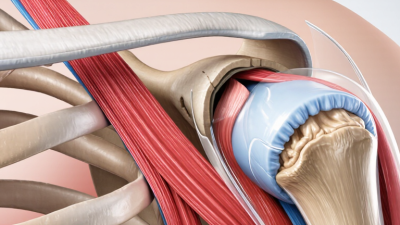
Anatomic knee kinematics solutions aim to replicate how a healthy knee moves. The goal is not simply to enable bending. A natural knee combines rolling, sliding, and rotation during each step. During walking, the femur moves across the tibia while the joint remains stable. Small changes in alignment can affect comfort, balance, and load distribution. Motion is not a hinge.

Buyers often seek solutions that reflect this complex movement more accurately. Experienced clinical teams may review gait patterns, imaging, and range-of-motion data before selecting an approach. Laboratory testing can measure flexion, rotation, and contact pressure under controlled conditions. These checks help connect design claims with observable evidence. No model is perfect. That limitation deserves attention.

When a solution follows more anatomical movement, the knee may feel less restricted during daily activities. A controlled pattern can also support smoother transitions from sitting to standing, climbing stairs, or walking on uneven ground. The femur and tibia should move together, not behave like disconnected parts. Soft-tissue balance remains important because geometry alone cannot explain every patient’s experience.

Patients differ in anatomy, muscle strength, and recovery capacity. Results can vary. Surgeons and engineers should therefore assess repeatable data, practical fit, and long-term performance. A solution that imitates natural motion may offer meaningful advantages, but careful evaluation still matters. Real knees are adaptable, and artificial systems must continue learning from that complexity.

Which Clinical and Functional Needs They Address

Anatomic knee kinematics solutions address a practical problem: knees do not move like simple hinges. During walking, the femur rolls, glides, and rotates across the tibia. Small changes can affect stability, stair climbing, and confidence on uneven ground.

The need is substantial. The World Health Organization reports that osteoarthritis affected 528 million people worldwide in 2019. Knee disease often brings pain, stiffness, reduced walking distance, and difficulty standing from a chair. Motion analysis can reveal more than a static image. It can show whether a knee tracks smoothly through flexion, or shifts unexpectedly under load. That detail supports better assessment and more individualized planning.

Functional evidence matters after treatment. The National Joint Registry has recorded more than one million hip and knee replacement procedures in the United Kingdom, reflecting a large and growing clinical workload. Anatomic kinematics tools can help clinicians compare movement patterns before and after intervention. They may also support implant alignment decisions, rehabilitation targets, and patient discussions using visible motion data.

But technology is not a substitute for judgment. Sensors can drift. Laboratory movement may not match a patient carrying groceries at home. Clinicians must combine kinematic findings with pain scores, strength testing, imaging, and lived experience. The evidence is promising, yet not perfect. That limitation deserves attention.

Why Do Buyers Choose Anatomic Knee Kinematics Solutions?

Which clinical and functional needs do they address?

Buyers seek anatomic knee kinematics solutions because everyday activities require different levels of flexion and controlled motion. A design that supports natural flexion, posterior femoral rollback, axial rotation, and stability can help address walking, stair use, chair rising, footwear management, and deep squatting demands.

Representative peak knee-flexion values are based on published activity-analysis data from Laubenthal, Smidt, and Kettelkamp, “A Quantitative Analysis of Knee Motion During Activities of Daily Living,” Physical Therapy, 1972. Values vary by individual, technique, and measurement method.

How Buyers Evaluate Performance and Compatibility

Buyers evaluate anatomic knee kinematics solutions through measurable performance, not attractive specifications alone. They examine how accurately the system reflects natural joint motion during flexion, extension, and rotational loading. Reliable tracking should remain stable when movement becomes fast or slightly irregular. Small errors matter.

Experienced clinical and engineering teams often review repeatability across multiple users. They compare test results, calibration records, and independent validation data. A solution may perform well in a controlled laboratory, yet respond differently in a busy operating environment. That difference deserves attention. Buyers also assess whether the system supports clear visualization, efficient data capture, and practical interpretation. Complex output can slow decisions instead of improving them.

Compatibility is equally important. The solution should connect smoothly with existing imaging, planning, measurement, and data-management workflows. Teams check software requirements, file formats, operating conditions, training demands, and maintenance access. Hardware must fit available space and avoid obstructing routine procedures. Integration should feel predictable.

Real-world feedback helps, but it is not perfect evidence. One hospital’s workflow may not match another’s. Buyers should ask for documented use cases, transparent limitations, service response times, and user training details. Cost also includes downtime, upgrades, and staff learning. A thoughtful evaluation may reveal that the most advanced option is not always the most suitable one. Practical compatibility often determines long-term value.

What Factors Influence Purchasing Decisions

Why Do Buyers Choose Anatomic Knee Kinematics Solutions?

Purchasing decisions often begin with clinical confidence. Surgeons want motion that reflects real anatomy, not only attractive specifications. The American Joint Replacement Registry’s 2023 Annual Report included more than three million hip and knee procedure records. That scale makes measurable outcomes increasingly important. Buyers therefore examine range of motion, alignment consistency, revision rates, and patient-reported results. Evidence matters.

Workflow also influences the decision. A solution may perform well in testing but slow operating-room preparation. Procurement teams assess surgical compatibility, staff training, data integration, maintenance, and technical support. The FDA’s annual medical-device reporting framework reinforces the importance of traceability and post-market monitoring. Reliable documentation can reduce uncertainty during evaluation. However, registry data cannot guarantee results for every patient. Anatomy varies, and clinical skill still matters.

Cost remains practical rather than purely financial. Buyers compare acquisition price with procedure time, training demands, inventory needs, and possible revision costs. Reports from the Organisation for Economic Co-operation and Development show major variation in healthcare spending and procedure capacity across countries. That variation encourages hospitals to seek predictable value, not simply advanced features. I would also question overly precise promises. A kinematic model can support better decisions, but it cannot replace surgeon judgment, patient communication, or long-term follow-up. Fit matters.

Why Do Buyers Choose Anatomic Knee Kinematics Solutions? - What Factors Influence Purchasing Decisions

Purchasing Factor What Buyers Evaluate Why It Matters in Anatomic Knee Kinematics Typical Evidence or Requirement Influence on Purchase
Anatomic representation Whether the solution reflects patient-specific bone geometry, joint alignment, soft-tissue constraints, and implant positioning. Knee motion is influenced by individual anatomy and ligament balance. A solution that represents these factors can support more clinically relevant analysis than a simplified mechanical model. CT or MRI compatibility, anatomical landmarks, deformity assessment, and customizable modeling workflows. Very High
Measurement accuracy Accuracy and repeatability of kinematic measurements, including translation, rotation, flexion, and alignment. Small errors in motion or alignment measurements may affect implant assessment, surgical planning, research conclusions, and postoperative evaluation. Validation studies, calibration procedures, repeatability data, error reporting, and clearly defined coordinate systems. Very High
Clinical relevance The extent to which outputs correspond to real patient movement, symptoms, function, and clinical decision-making. Buyers generally prefer data that can be interpreted in relation to gait, range of motion, stability, pain, function, and patient outcomes. Clinical publications, outcomes research, clinically interpretable reports, and compatibility with established assessment protocols. Very High
Soft-tissue and ligament modeling Ability to account for ligament tension, collateral stability, posterior cruciate ligament behavior, and surrounding soft-tissue effects. Knee kinematics are not determined by bone geometry alone. Soft-tissue constraints influence stability, rotation, translation, and the flexion path. Configurable ligament parameters, force or tension inputs, sensitivity analysis, and documented biomechanical assumptions. High
Dynamic motion analysis Capability to assess movement during activities such as walking, stair negotiation, squatting, or sit-to-stand. Static alignment does not fully describe knee function. Dynamic data can reveal activity-dependent instability, altered loading, and changes in the flexion-extension pattern. Motion capture or fluoroscopic integration, synchronized force data, activity protocols, and time-resolved outputs. High
Implant and surgical planning compatibility Ability to evaluate component position, alignment targets, balancing strategies, and alternative surgical scenarios. Purchasers seek solutions that can connect kinematic findings with preoperative planning, intraoperative decisions, or postoperative assessment. Digital planning interfaces, implant geometry import, alignment analysis, balancing assessment, and exportable planning reports. High
Workflow efficiency Time required for data import, segmentation, modeling, analysis, reporting, and user training. Complex workflows increase labor requirements and may limit adoption in hospitals, laboratories, and high-volume research environments. Standardized protocols, automation features, intuitive interfaces, reusable templates, and documented processing steps. High
Interoperability and data export Ability to exchange imaging, motion, force, implant, and analysis data with existing clinical or research systems. Interoperability reduces duplicate data entry and supports collaboration between surgeons, engineers, researchers, and rehabilitation teams. Common medical-image formats, structured data export, application programming interfaces, and compatibility with statistical or modeling software. High
Validation and scientific credibility Quality of peer-reviewed evidence, test methods, reference standards, and transparency of model assumptions. Healthcare and research buyers need confidence that results are reproducible, clinically meaningful, and suitable for regulated or publishable work. Peer-reviewed studies, benchtop or cadaver validation, inter- and intra-observer analysis, and documented limitations. Very High
Regulatory and data security requirements Compliance with applicable medical-device, privacy, cybersecurity, and institutional governance requirements. Clinical deployment requires appropriate controls for patient data, software performance, access management, auditability, and risk management. Security documentation, user access controls, data encryption, quality procedures, risk files, and region-specific regulatory support. Very High
Total cost of ownership Software licensing, hardware, installation, training, maintenance, upgrades, staffing, and consumables. The lowest purchase price may not represent the lowest long-term cost if implementation requires extensive training, specialized equipment, or manual processing. Multi-year budget estimate, implementation plan, support terms, maintenance schedule, and measurable productivity assumptions. High
Technical support and training Availability of onboarding, application support, troubleshooting, workflow customization, and continuing education. Specialized kinematic systems often require multidisciplinary expertise. Reliable support can reduce implementation risk and improve consistent use. Training materials, response targets, technical documentation, remote assistance, and competency assessment procedures. High
Scalability and future readiness Ability to expand from individual studies to larger clinical programs, multicenter research, or additional orthopedic applications. Buyers often consider whether the solution can support growing datasets, new analysis methods, additional users, and evolving clinical requirements. Multi-user access, cloud or local deployment options, version control, data governance, modular features, and upgrade pathways. Medium to High
Interpretation: Buyers typically prioritize anatomical fidelity, measurement validity, clinical relevance, workflow integration, and compliance before comparing price. The final decision depends on the intended use, such as clinical care, surgical planning, implant evaluation, rehabilitation, or biomechanical research.
volume-unmute-yellow-icon volume-unmute-blue-icon