Companies


Browse products by medical specialities area or therapies

Arthroplasty
Product by Therapies
Product by Type
Sports Medicine
Product by Therapies
Knee Portfolio - ACL /PCL Reconstruction
Knee Portfolio - Meniscus Repair
Shoulder Portfolio - Bankart/Slap Repair
Shoulder Portfolio - Rotator Cuff Repair
Product by Type


All-suture anchor technology has changed how surgeons approach soft-tissue fixation, especially in procedures where preserving bone matters. Its compact footprint can leave more room for revision options, but small does not automatically mean suitable. Buyers must weigh anchor deployment, suture configuration, pullout performance, and compatibility with the intended repair.
A useful principle, consistent with the shoulder-repair expertise of orthopedic surgeon Dr. Stephen Snyder, is: “Choose fixation for the tissue, tear pattern, and procedure—not the smallest implant alone.” This is an editorial paraphrase, not a verified direct quotation; no source was provided to confirm his exact words. That distinction matters when evaluating medical technology.
The seven technologies in this guide are considered through practical details: insertion steps, available sizes, handling, and evidence behind performance claims. Buyers should also examine training requirements and the quality of supporting clinical data. Look closely. A smooth deployment in a demonstration may not reflect every operating-room condition. Product selection depends on the procedure, surgeon judgment, and patient needs, so this overview is not a substitute for clinical evaluation. Some trade-offs remain difficult to compare across studies. That is worth acknowledging.
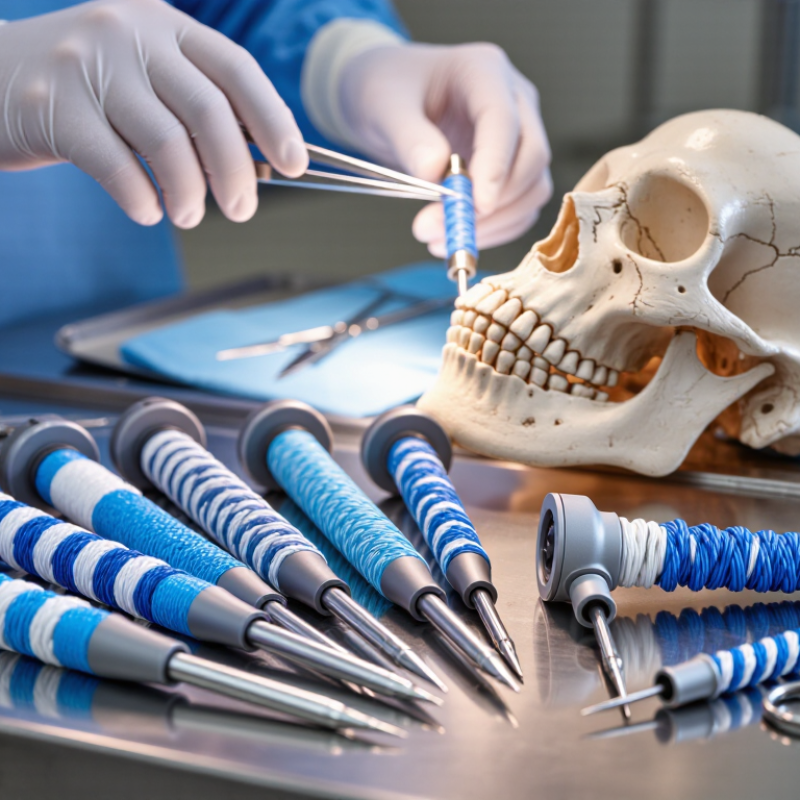
An all-suture anchor uses flexible suture material rather than a rigid body inside the bone. The surgeon passes it through a small pilot hole, then pulls the suture limbs to bunch the anchor beneath the cortical surface. This creates a soft-tissue fixation point. Sutures are then passed through the labrum, capsule, or tendon and tied, or secured in a knotless construct. The anchor holds tissue against bone; it does not make the tissue heal by itself. Small footprint. Placement matters.
Peer-reviewed biomechanical testing reports pullout loads often around 100–300 N, but results vary with anchor design, bone density, insertion angle, and test method. These laboratory figures are not a guarantee of clinical performance. A weak or damaged cortical layer can reduce fixation, while poor deployment may leave the anchor inadequately expanded. Surgeons therefore assess bone quality and confirm fixation during the procedure. The small drill hole can preserve bone for future options, but it is not automatically safer in every case. One limitation is worth admitting: bench tests simplify living tissue and real shoulder motion. For buyers, published test conditions matter as much as the headline load number. A comparison without those details can mislead.
All-suture anchors use a compact, flexible suture-based body rather than a rigid plastic or metal anchor body. After insertion into a prepared bone socket, the anchor is deployed so the suture bundle expands or compacts against the socket walls. Suture limbs are then passed through tissue and secured with knots or a locking configuration. The options below describe design approaches that may overlap; they are not a performance ranking.
| Technology or configuration | How it works | Potential advantages | Buyer considerations | Common evaluation context |
|---|---|---|---|---|
| 1. Deployable braided-suture body | A braided suture bundle is inserted into a drilled bone socket and deployed. The bundle expands or compacts within the socket to resist pullout. | Uses a small, flexible implant body and can support suture-based tissue fixation. | Review the required socket dimensions, deployment steps, recommended bone conditions, and instructions for use. Correct deployment is essential. | General soft-tissue-to-bone repair where an all-suture anchor is appropriate. |
| 2. Knotless locking-loop configuration | A loop or locking feature secures the repair sutures without requiring a conventional knot at the anchor. | Can reduce knot tying at the anchor and allows fixation through a designed locking mechanism. | Check how tension is adjusted, how the lock is engaged, whether retensioning is permitted, and how the system handles excess suture. | Repairs where a knotless workflow is preferred and the locking method suits the planned tissue construct. |
| 3. Knotted suture configuration | Suture limbs are passed through the target tissue and secured with knots after the anchor is deployed. | Provides a familiar fixation method and lets the surgeon set tension while tying. | Consider knot management, available working space, tissue tensioning needs, and the number of limbs to handle. | Repairs in which a knotted construct is preferred or required by the surgical plan. |
| 4. Single-loaded configuration | The anchor is supplied with one suture strand or suture pair, depending on the specific design. | May simplify suture management when fewer limbs are needed. | Confirm the exact number and type of usable limbs; “single-loaded” terminology can vary. Determine whether the construct provides enough fixation points. | Repairs needing a relatively simple suture configuration. |
| 5. Double- or multi-loaded configuration | The anchor carries multiple suture strands or pairs, allowing more than one suture path from a single anchor site. | Can provide additional suture options without requiring a separate anchor for each strand. | More limbs can increase suture-management demands. Check anchor capacity, deployment instructions, and the intended repair pattern. | Constructs that call for multiple fixation points or more than one suture path. |
| 6. Suture-tape-loaded configuration | Flat suture tape is used instead of, or alongside, round suture in the repair construct. | The wider tape offers a different tissue-contact geometry from round suture. | Verify tissue-passage compatibility, the intended loading and knotting or locking method, and whether tape is specified for the procedure. | Repairs designed around tape-based tissue capture or fixation. |
| 7. Small-diameter, low-profile design | The anchor is designed for a relatively small bone socket; the suture-based body provides fixation within that prepared socket. | A smaller socket may help conserve local bone compared with a larger socket, subject to the device design and surgical technique. | Do not select by diameter alone. Assess bone quality, socket preparation, insertion angle, deployment reliability, and the manufacturer’s stated indications. | Procedures where socket size and bone preservation are relevant planning factors. |
Selection note: These configurations are not mutually exclusive—for example, an anchor may be both multi-loaded and knotless. Compare the device’s labeled indications, required instruments, deployment steps, compatible suture type, and clinical evidence. Anchor fixation in bone and suture fixation to tissue are distinct parts of the repair.