Browse products by medical specialities area or therapies
Product by Therapies
Product by Type
Product by Therapies
Product by Type
Arthroplasty
Product by Therapies
Product by Type
Sports Medicine
Product by Therapies
Knee Portfolio - ACL /PCL Reconstruction
Knee Portfolio - Meniscus Repair
Shoulder Portfolio - Bankart/Slap Repair
Shoulder Portfolio - Rotator Cuff Repair
Product by Type
Choosing an implant material is not a simple contest of strength. A hip component faces repeated loading, while a dental implant must integrate with bone in a much smaller space. High performance implant materials are judged by how they behave in real bodies, not just in laboratory charts. That includes strength, wear resistance, corrosion behavior, imaging compatibility, and the body’s response over time.
In 2026, commonly discussed options include titanium and its alloys, cobalt-chromium alloys, medical-grade stainless steel, ceramics such as zirconia, and specialized polymers like PEEK. Each has trade-offs. Titanium is valued for its favorable strength-to-weight profile and established clinical use. Ceramics can offer strong wear performance, but brittleness and design constraints matter. Polymers may be useful where flexibility or imaging considerations are important, yet their long-term performance depends on the application. No material is best for every implant.
This guide compares these options through practical criteria: durability, biocompatibility, manufacturing, and the evidence behind their use. It also considers how implant design, surface treatment, patient factors, and surgical technique can change outcomes. Small details count. A polished surface, for example, may behave differently from a porous one.
Material science keeps advancing, but newer does not automatically mean better. Evidence varies by device and indication, and long-term data can be limited. That uncertainty deserves attention. The aim here is to clarify what current research and clinical experience can—and cannot—tell patients and professionals about implant material choices.
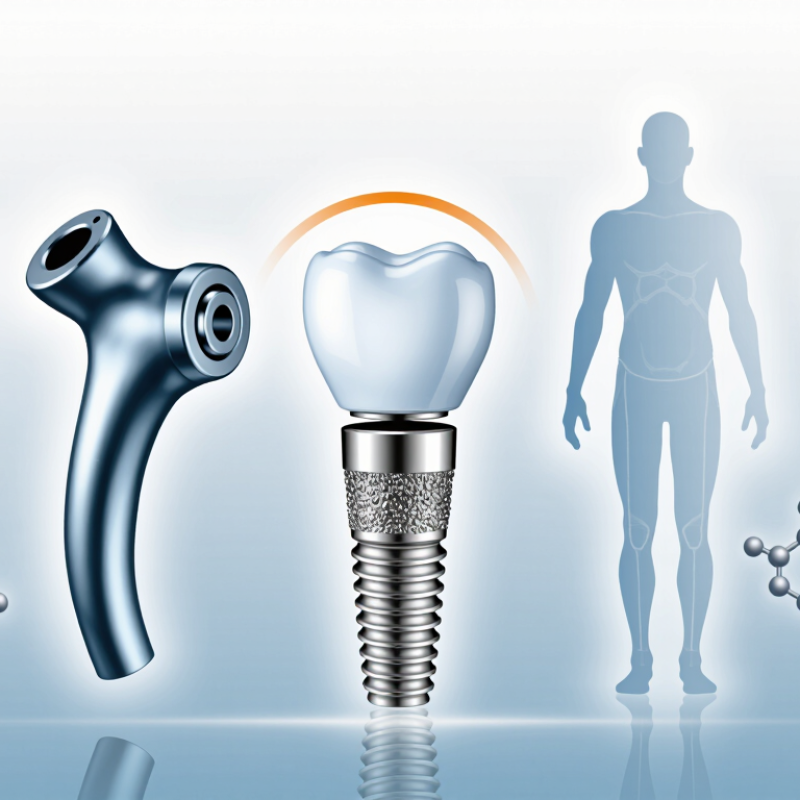
In 2026, a high-performance implant material is not simply the strongest option. It must resist fatigue and corrosion while supporting tissue response and reliable sterilization. Its stiffness matters, too: cortical bone is commonly reported at roughly 10–30 GPa, while titanium alloys are near 110 GPa. That mismatch can affect how loads move through bone. Performance depends on implant shape, surface finish, and placement—not material alone.
For a concrete benchmark, ASTM F136-13(2021) sets minimum tensile and yield strengths of 860 MPa and 795 MPa, respectively, for wrought Ti-6Al-4V ELI. These figures help assess mechanical capacity, but they do not prove long-term clinical success. Engineers also examine fatigue behavior, corrosion resistance, imaging compatibility, and manufacturing consistency. Porous surfaces may encourage bone attachment, yet pore size and cleanliness need careful control. Small process defects matter.
Tips: Compare test results under relevant conditions, not just headline strength. Ask whether fatigue and corrosion data reflect the intended body site and loading cycle. No material is perfect; the best choice depends on the patient, device design, and evidence from testing.
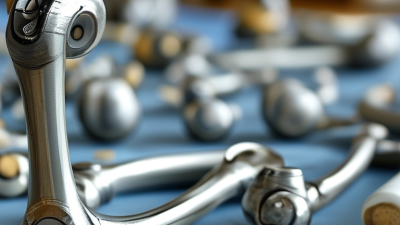
Modern implants draw from several material families, each serving a different purpose. Titanium and its alloys are valued for strength, low weight, and compatibility with bone. A roughened titanium surface can help bone attach, though performance depends on implant design and the patient’s biology. Stainless steel remains useful in some temporary and load-bearing devices. Cobalt-chromium alloys resist wear and are used where repeated contact creates friction.
Ceramics, including alumina and zirconia, offer hard, smooth surfaces for certain joint components. They can reduce wear, but brittle failure remains a design concern. Polymers such as ultra-high-molecular-weight polyethylene provide a cushioning surface in joint replacements; tiny wear particles can still matter over time. PEEK is a strong, radiolucent polymer used in selected spinal devices, while calcium-phosphate ceramics can encourage bone integration in coatings or graft substitutes. No material is perfect. Composites combine materials to balance stiffness, durability, and imaging needs, but their long-term behavior requires careful evaluation. The right family depends on anatomy, loading, expected service life, and clinical evidence—not a single “best” label.
| Material family | Common examples | Key performance characteristics | Common implant applications | Important limitations |
|---|---|---|---|---|
| Titanium and titanium alloys | Commercially pure titanium; Ti-6Al-4V alloy | High strength-to-weight ratio, corrosion resistance, and established biocompatibility. Titanium surfaces can support bone integration. | Dental implants, hip and knee components, bone plates, screws, and spinal devices | Less stiff than cobalt-chromium but still substantially stiffer than bone; wear debris can be a concern at articulating surfaces. |
| Cobalt-chromium alloys | Cobalt-chromium-molybdenum alloys | High strength, hardness, fatigue resistance, and wear resistance. | Joint replacement bearing components, dental frameworks, and selected orthopedic devices | High stiffness may contribute to stress shielding; metal sensitivity and ion release require consideration. |
| Implant-grade stainless steels | 316L stainless steel | Good strength, corrosion resistance, and manufacturability, often at comparatively low cost. | Temporary fracture fixation plates, screws, wires, and selected surgical devices | Generally less suitable than titanium alloys for some long-term applications because of corrosion, nickel sensitivity, and fatigue considerations. |
| High-performance polymers | Polyetheretherketone (PEEK); ultra-high-molecular-weight polyethylene (UHMWPE) | PEEK is lightweight and radiolucent; UHMWPE offers low friction and is widely used as a bearing material. | Spinal cages and selected orthopedic components; joint replacement liners and bearing surfaces | PEEK is relatively bioinert and may require surface modification for improved bone attachment. Polymer wear and oxidation must be controlled. |
| Bioactive ceramics | Alumina; zirconia; hydroxyapatite | Alumina and zirconia provide hardness and wear resistance; hydroxyapatite is chemically similar to a mineral phase in bone. | Joint replacement bearing surfaces; bone-contact coatings and selected dental applications | Ceramics can be brittle and sensitive to flaws. Hydroxyapatite coatings do not replace the structural strength of the underlying implant. |
| Bioabsorbable polymers | Polylactic acid (PLA); polyglycolic acid (PGA); related copolymers | Designed to degrade over time, potentially reducing the need for a second procedure to remove temporary fixation. | Selected screws, pins, sutures, and temporary fixation devices | Strength decreases during degradation; degradation rate, local tissue response, and mechanical demands must be carefully matched to the application. |
| Magnesium-based biodegradable metals | Magnesium and magnesium alloys | Potentially resorbable metal fixation with mechanical properties closer to bone than many permanent metallic alloys. | Selected experimental and clinical-use resorbable fixation devices, depending on regulatory clearance and indication | Corrosion and hydrogen evolution can occur too rapidly unless carefully controlled; performance depends on alloy design and device geometry. |
| Porous and surface-engineered materials | Porous titanium; coated titanium; textured implant surfaces | Surface architecture can encourage bone ingrowth or attachment while retaining a load-bearing structural core. | Orthopedic stems, acetabular components, spinal implants, and dental implants | Performance depends on pore structure, coating quality, manufacturing consistency, and the specific clinical indication. |
Choosing an implant material depends on where it will sit, what forces it must bear, and how surrounding tissue responds. Titanium alloys are widely used in dental and orthopedic implants because they combine strength with relatively low weight and can integrate with bone. Their surface finish matters: a roughened surface may support bone attachment, but it is not a substitute for careful surgical placement or ongoing monitoring. Small details count.
Ceramics such as zirconia are considered for dental restorations and selected implants, especially when appearance or metal sensitivity is a concern. They can offer a tooth-like color, but their fracture behavior and design limits need attention under heavy biting forces. Cobalt-chromium alloys are used in some joint components, where wear resistance and load-bearing capacity are important. They are not interchangeable with materials intended for small dental fixtures. Fit and movement matter.
Polymers such as polyethylene often serve as bearing surfaces in joint replacements, paired with a harder component to reduce friction. Their performance depends on wear, alignment, and the patient’s activity over time. No material wins every application. A surgeon’s experience, imaging, medical history, and the quality of clinical evidence should guide selection. Even well-studied materials can behave differently in individual patients, and that uncertainty deserves honest discussion.
Material choice starts with the implant’s job, not a “best” material ranking. A hip stem must carry repeated loads, while a dental implant also needs a surface that supports bone attachment. The ASM Handbook reports typical elastic moduli near 110 GPa for titanium alloys and 210 GPa for cobalt-chromium alloys. Both exceed bone’s stiffness, so geometry and surface treatment matter alongside strength. Too much stiffness can shift load away from bone. That detail is easy to overlook.
Weight and wear change the decision. Titanium alloy is relatively light, at about 4.4 g/cm³; cobalt-chromium is roughly twice as dense. For joint bearings, engineers consider wear debris, corrosion, and friction, not just hardness. The 2024 National Joint Registry report tracks revision outcomes across implant types, underscoring that performance depends on the whole construct and follow-up period—not a single material score. Ceramic components may offer strong wear resistance, but brittleness and edge loading deserve attention. There is no free lunch.
Selection also weighs imaging needs, allergy history, manufacturing consistency, and the patient’s activity and anatomy. ISO 5832 and ASTM F136 specify material requirements for implant metals; meeting a standard supports quality control, but cannot predict an individual outcome. In practice, clinicians and engineers balance evidence with the specific load path and fixation method. Some uncertainty remains, especially when long-term data for newer designs are limited. That should prompt careful review, not confident guessing.
In 2026, implant-material research is moving beyond strength alone. Porous titanium structures, made with additive manufacturing, can create small, bone-like openings that support tissue attachment while reducing implant weight. Grand View Research estimated the global 3D-printed medical devices market at about US$2.7 billion in 2023, with projected annual growth of 16.8% from 2024 to 2030. That figure covers more than implants, so it signals wider adoption—not proof of better patient outcomes. The distinction matters.
Surface engineering is changing, too. Researchers are testing calcium-phosphate coatings and carefully textured surfaces to encourage bone bonding, while aiming to limit particle release and inflammation. For polymer implants, carbon-fibre-reinforced PEEK remains attractive because it is lighter than many metals and can produce less imaging artefact. But results depend on implant design, surgical placement, and patient biology. Materials do not perform in isolation.
Resorbable magnesium alloys are another active area. They may gradually dissolve as tissue heals, but controlling the rate remains difficult. Too fast, and support may weaken early; too slow, and the material may outstay its purpose.
Promising in the lab. Not settled in practice.
A 2024 market outlook from Grand View Research projected continued growth in orthopedic implants, yet commercial growth alone cannot establish safety or durability. Long-term clinical follow-up still matters, and some new materials may need years of evidence before their benefits are clear.