Companies




Browse products by medical specialities area or therapies

Arthroplasty
Product by Therapies
Product by Type
Sports Medicine
Product by Therapies
Knee Portfolio - ACL /PCL Reconstruction
Knee Portfolio - Meniscus Repair
Shoulder Portfolio - Bankart/Slap Repair
Shoulder Portfolio - Rotator Cuff Repair
Product by Type


Choosing the right Meniscus repair systems in 2026 means looking beyond catalogue photos and headline claims. Global buyers need to compare device design, surgical workflow, evidence, service, and local availability. A compact implant may simplify handling, while a different configuration may offer better access for a particular tear pattern. Fit varies.
Dr. Robert LaPrade, an orthopedic surgeon and researcher in sports medicine, is associated with a tissue-preservation approach. A practical paraphrase of that principle is: “When repair is appropriate, preserve viable meniscal tissue.” This is not a verbatim quotation or a substitute for clinical judgment. Repair decisions depend on the patient, tear characteristics, and the treating surgeon’s assessment.
This guide examines systems used in meniscal repair, including all-inside and other repair approaches. It considers deployment control, implant and suture options, instrument ergonomics, training, and the clarity of manufacturer documentation. Buyers should also verify product availability, service support, and applicable market authorization in their intended regions. Details matter. A low unit price can look attractive, but training, instrument compatibility, and dependable supply may change the total value. No single system fits every operating room or case. The comparisons that follow aim to help procurement teams and clinicians ask sharper questions—not to declare one device universally best. Some information may vary by market, and product claims deserve careful review.
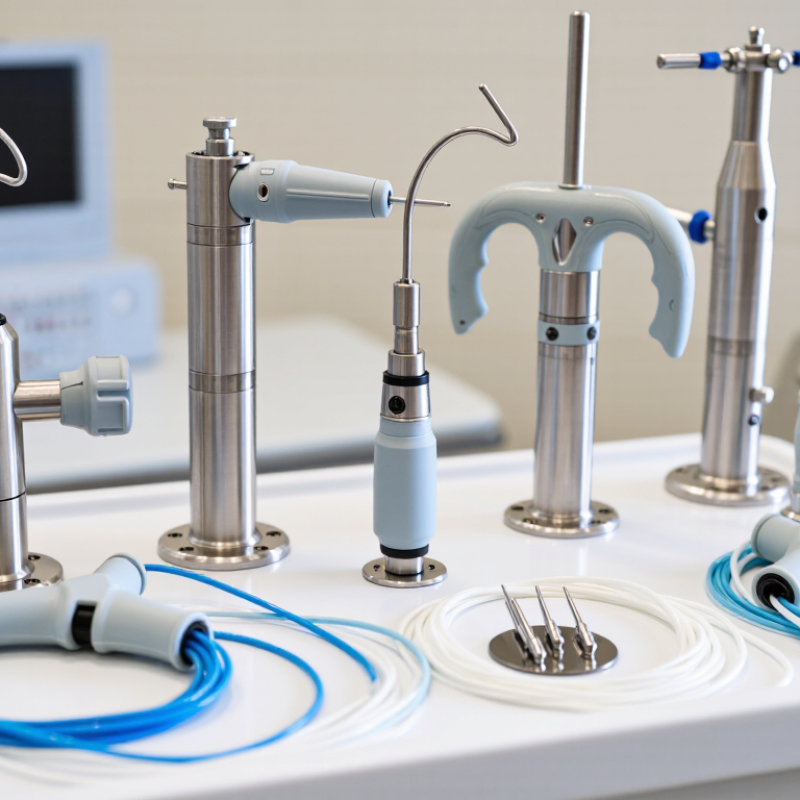
Meniscus repair systems are sets of surgical instruments and implants used to hold suitable tears together while healing occurs. A typical system includes a delivery device, small anchors, and strong suture material. Some designs place anchors on both sides of a tear and connect them with a suture; others use different fixation layouts. The surgeon views the joint through an arthroscope, a narrow camera that displays the meniscus on a monitor. The goal is stability.
During repair, the clinician guides the device into the joint, passes or deploys the fixation elements, then adjusts the suture to bring the torn edges together. The exact sequence depends on the tear’s location, shape, and tissue quality. Small details matter. A repair should hold tissue without excessive tension or unwanted irritation to nearby structures. Not every tear qualifies.
System choice is only one part of the decision. Clinicians also consider patient factors, access to the tear, instrument handling, and their training with the technique. Device designs can differ in how anchors deploy, how sutures are managed, and how much space the instruments need. Those differences matter in a narrow joint. It is also worth acknowledging that a device cannot compensate for poor tissue or guarantee healing; outcomes vary, and assessment belongs with a qualified orthopedic professional.
| System Category | How It Works | Common Repair Applications | Potential Advantages | Important Considerations | Buyer Evaluation Points |
|---|---|---|---|---|---|
| All-Inside Repair System | Arthroscopic instruments deliver sutures or small fixation devices through joint portals. The repair construct is placed across the tear, and the suture is tightened to approximate the meniscal edges. | Selected posterior-horn and body tears that can be reached and securely captured arthroscopically. | Typically avoids a separate incision for passing long needles through the capsule; can offer a streamlined arthroscopic workflow. | Device design and deployment technique vary. Surgeons must avoid excessive tension, unintended tissue capture, and placement near vulnerable structures. | Review instrument ergonomics, implant or suture configuration, depth-control features, disposable components, instructions for use, and local regulatory status. |
| Inside-Out Repair System | Long needles carrying sutures are passed from inside the joint through the meniscus and capsule. The sutures are retrieved through a separate incision and tied outside the capsule. | A range of repairable tears, including many vertical longitudinal tears in the meniscal body and posterior region. | Allows multiple sutures and flexible stitch placement along a tear; has a long-established role in meniscal repair. | Requires an additional incision, suture retrieval, and careful protection of nearby neurovascular structures, particularly posteriorly. | Assess needle options, cannula and protection instruments, suture compatibility, procedural training needs, and the availability of appropriate support instruments. |
| Outside-In Repair System | Needles are introduced from outside the joint, passed through the capsule and meniscus, and retrieved arthroscopically. Sutures are then secured outside the joint. | Often used for anterior-horn and selected anterior or middle-third tears that are accessible from outside the joint. | Can provide controlled access to anterior tear locations and permits knot tying outside the joint. | Needle trajectory and suture retrieval require practice. Access may be less convenient for some posterior tear locations. | Check needle configurations, cannulas, suture-passing tools, compatibility with the intended arthroscopic workflow, and availability of training. |
| Hybrid Repair Approach | More than one repair technique is used during the same procedure—for example, an all-inside method in one region and an inside-out or outside-in method in another. | Complex or extended tears where location, tear pattern, access, or tissue quality makes a single method less suitable for every segment. | Allows the surgeon to select a technique according to the location and configuration of each part of the tear. | Requires familiarity with multiple techniques and may involve different instruments, consumables, and procedural steps. | Evaluate the full instrument set, cross-compatibility of sutures and accessories, inventory requirements, and staff training workload. |
| Meniscal Root Repair System | For many root repairs, sutures are secured to the meniscal root and passed through a tibial bone tunnel for fixation at the tibial cortex. Some cases may use a suitable fixation device or anchor-based approach. | Selected meniscal root tears or avulsions when repair is clinically appropriate. | Provides a method to reattach the root to its anatomical footprint; the technique can be planned around tunnel or anchor fixation. | Root repair is a distinct procedure from routine tear repair. Tunnel placement, fixation method, tissue quality, and patient-specific factors require careful surgical assessment. | Confirm availability of tunnel guides, drills, passing instruments, fixation options, and procedure-specific instructions; verify market authorization for each component. |
Selection note: There is no universally best system for every tear. Repairability and technique depend on tear pattern, location, tissue quality, patient factors, and surgeon judgment. Buyers should verify current regulatory authorization, labeling, sterilization status, and market availability in each destination country.