China Best Bioabsorbable Interference Screws Supplier?
Choosing the China Best Bioabsorbable Interference Screws Supplier? This question deserves more than a low-price comparison. In ACL and other ligament reconstruction, a screw sits beside delicate graft fibers, often under demanding mechanical stress. Its thread design, insertion torque, material purity, and degradation behavior can influence fixation quality. Small details matter.
Professor Freddie Fu, a respected authority in sports medicine, said, “The ACL is not a simple structure.” His observation remains valuable when evaluating Bioabsorbable interference screws. A responsible supplier should understand anatomy, graft tension, tunnel placement, and biological healing. Product selection cannot rely on attractive catalogs alone.
Experienced buyers should request material specifications, sterilization records, dimensional tolerances, and traceability documents. They should also review pullout testing, insertion performance, degradation studies, and clinical evidence. ISO 13485 certification may support quality confidence, but it does not replace careful supplier verification. Regulatory registration in the target market also requires attention.
A factory visit can reveal practical details. Look for clean assembly areas, calibrated equipment, controlled packaging, and trained inspection staff. Ask how rejected components are handled. Ask how complaints are investigated.
No supplier is perfect. That is worth admitting. Some product claims may sound stronger than the evidence supports. Some buyers may focus too heavily on price. A reliable China supplier combines engineering discipline, transparent communication, and consistent production. The best choice supports surgeons, distributors, and patients with documented quality rather than polished promises.

What Are Bioabsorbable Interference Screws?
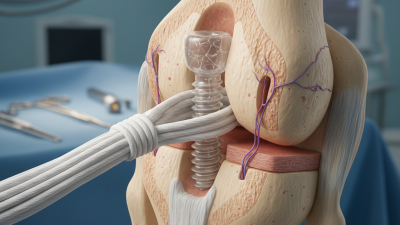
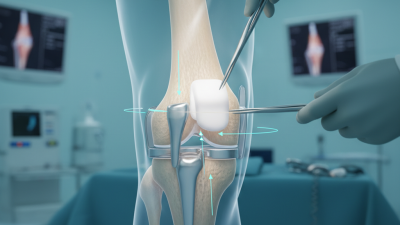
Bioabsorbable interference screws are fixation devices used mainly in ligament reconstruction, especially ACL surgery. They secure a tendon graft inside a prepared bone tunnel. The screw presses the graft against the tunnel wall, creating early mechanical stability while healing develops.
These screws are commonly made from polymers such as PLLA, PGA, or blended copolymers. Some designs use bioresorbable metals, including magnesium-based materials. Their structure gradually breaks down or resorbs, depending on the material, screw geometry, and patient biology. This process may reduce long-term hardware removal and produce fewer magnetic resonance imaging artifacts than conventional metal screws. The benefit is practical. The tunnel becomes easier to assess on follow-up images.
Performance still depends on details. A screw must provide enough insertion strength without damaging the graft or surrounding bone. Its degradation rate should match tissue healing, but that match is not perfect. Rapid breakdown may affect local tissue response, while very slow resorption can leave material for years. Small differences in polymer composition, storage conditions, and manufacturing precision can change handling during surgery.
From a supplier evaluation perspective, technical documents matter. Review material identity, tensile data, sterilization validation, packaging integrity, and shelf-life testing. Clinical evidence should support the intended application, not merely laboratory strength. Surgeons may also value smooth insertion, predictable torque, and clear sizing marks. Bioabsorbable does not mean risk-free. Careful patient selection and surgical technique remain essential.
How Do Bioabsorbable Interference Screws Work?
Bioabsorbable interference screws secure a tendon graft inside a bone tunnel during ACL reconstruction. Their threads compress the graft against the tunnel wall, creating immediate mechanical fixation. As healing progresses, bone grows around the graft. The polymer then gradually hydrolyzes into smaller molecules, which the body processes through normal metabolic pathways. The process is slow, not magical.
A 2023 systematic review in Knee Surgery, Sports Traumatology, Arthroscopy analyzed 14 comparative studies. It reported similar stability and patient-reported outcomes between bioabsorbable and metal screws. However, degradation speed varied by polymer type, screw design, and local biology.
Some studies also described tunnel enlargement or sterile inflammatory reactions. These findings matter. The material may disappear, but its clinical effects do not always disappear with it.
In practice, surgeons should assess graft tension, tunnel quality, and imaging results together.
Tips: Confirm the polymer composition and expected absorption period before selection. Review independent test data, not only supplier brochures. The FDA and ISO framework emphasizes biocompatibility, mechanical strength, and degradation safety. A 2022 orthopedic materials review also noted that fixation performance depends strongly on insertion torque and bone density. Avoid excessive torque; it can damage the screw or tunnel. I have seen planning become too product-focused. Biology still decides much of the outcome.
Which Materials and Designs Are Available?
China Best Bioabsorbable Interference Screws Supplier?
Material selection determines fixation strength, degradation behavior, and imaging quality. Common options include PLLA, PLDLA, PGA blends, and composites containing β-TCP. Magnesium alloys are also emerging for temporary fixation. PLLA maintains strength for longer periods, while PGA-based materials degrade faster. That difference matters in ACL reconstruction. A 2023 systematic review in the Journal of ISAKOS reported generally comparable clinical outcomes between bioabsorbable and metal interference screws, but noted variable tunnel widening and inflammatory responses. The material choice is not perfect.
Designs vary as much as polymers. Cannulated screws support guide-wire placement. Fully threaded designs improve graft compression. Tapered bodies may reduce insertion torque, while reverse-cutting flutes can limit bone damage during removal. Some suppliers offer variable-pitch threads for controlled advancement. Others provide radiopaque markers for easier postoperative positioning. Grand View Research reported continued growth in the global orthopedic biomaterials market, driven by absorbable fixation and minimally invasive procedures. Yet market growth does not prove every design works equally well.
Tips: Ask for ISO 10993 biocompatibility data, sterilization validation, dimensional inspection records, and pullout testing. Request degradation data at 37°C, not only short-term mechanical results. Confirm whether the screw fits your graft diameter and tunnel geometry. A supplier should explain polymer batch variation openly. That detail is often overlooked. Judge the evidence, not the catalog language.
Bioabsorbable Interference Screw Materials and Resorption Windows
Approximate time to substantial material resorption varies with polymer formulation, crystallinity, implant size, and local biology.
Common material options include PLLA for long-term structural support, PLDLA for a faster absorption profile, PGA for relatively rapid degradation, and β-TCP/polymer composites that combine polymer fixation with an osteoconductive ceramic phase. Available designs commonly include cannulated, tapered, fully threaded, partially threaded, and blunt-tip configurations. Final selection should consider fixation strength, tunnel geometry, radiographic visibility, degradation profile, and surgeon preference.
How to Evaluate a China-Based Supplier?
Evaluating a China-based bioabsorbable interference screw supplier requires more than comparing prices. Start with the supplier’s technical documents, manufacturing history, and quality-system evidence. Ask whether the facility follows ISO 13485 principles and maintains clear batch traceability. Request material specifications, dimensional tolerances, sterilization records, and shelf-life data. A serious supplier should explain how polymer composition affects strength, degradation, and handling during implantation.
Review the production site through a video call or independent audit. Look for controlled storage, calibrated inspection equipment, clean packaging areas, and documented nonconformance procedures. Request samples from different production lots, not only hand-selected pieces. Test thread accuracy, insertion torque, mechanical strength, and degradation performance with qualified laboratories. Small details matter. A poorly fitted driver can damage the screw before use.
Communication also reveals technical maturity. Ask precise questions about tooling changes, process validation, and complaint handling. Confirm whether the supplier can provide controlled drawings and change notifications. Do not rely on a polished website or fast replies. I have seen attractive presentations hide weak documentation. That risk deserves attention. A factory may meet production targets yet lack experience with your intended clinical application. Discuss packaging integrity, sterilization compatibility, and export documentation early. Keep written records of every specification, revision, sample result, and agreed corrective action. Availability, price, and production capacity matter, but dependable evidence matters more.
What Quality and Compliance Standards Should Be Checked?
Choosing a China-based bioabsorbable interference screw supplier requires more than comparing prices. In practical supplier reviews, I examine the material, manufacturing controls, and evidence behind every claim. The supplier should identify the polymer grade, additives, and degradation profile clearly. Mechanical data should cover insertion torque, pullout strength, fatigue, and dimensional stability. Testing must match the intended anatomical application.
Quality systems matter. Check for a current ISO 13485 certificate and confirm its scope covers the relevant medical devices. Review biocompatibility testing under ISO 10993, including chemical characterization and degradation products. Sterilization validation, packaging integrity, and shelf-life studies also deserve close attention. Batch records should connect raw materials to finished screws. Traceability should be practical, not merely stated in a brochure. Regulatory documentation must fit the destination market, because approval requirements vary by country.
Tips: Request sample inspection reports, certificates of analysis, and recent audit findings. Ask how nonconforming products are controlled. Verify test laboratories and review original reports when possible. A polished certificate is not proof by itself. I would also inspect thread sharpness, cannulation, and surface finish under magnification. Small burrs can affect handling. No checklist is perfect. Supplier communication, change-control procedures, complaint handling, and recall readiness should be tested through direct questions. Some manufacturers may provide incomplete answers. That weakness should influence the final assessment.