7 Best PEEK Suture Anchor Solutions for Global Buyers

Choosing among PEEK suture anchor solutions takes more than comparing catalog prices. These implants are used in soft-tissue fixation, where anchor design, suture configuration, and surgical technique all matter. PEEK is valued for its strength and imaging characteristics, but performance depends on the specific device and its intended use. Details matter.

This guide introduces seven solutions for global buyers, including hospitals, distributors, and orthopedic procurement teams. It considers practical factors such as anchor size, insertion instrumentation, suture options, packaging, and the clarity of product documentation. Buyers should also review applicable clinical evidence, manufacturer quality controls, sterilization information, and the product’s instructions for use. Availability and documentation can differ by market. Not all do the same job.

A useful comparison should distinguish verifiable product features from broad marketing claims. It should also account for surgeon familiarity and compatibility with existing instruments. These details are easy to overlook during a price-focused review. Still, no list can replace clinical judgment or product-specific evaluation. The strongest choice is the one that fits the intended procedure, meets local procurement requirements, and comes with reliable technical support. Some differences may seem minor on paper, yet become important in the operating room. This overview offers a starting point, not a universal ranking. Buyers should confirm current specifications directly with manufacturers before making decisions.
7 Best PEEK Suture Anchor Solutions for Global Buyers

PEEK Suture Anchors Explained: Implant-Grade PEEK Under ASTM F2026

PEEK suture anchors combine a polymer body with a design intended to secure soft tissue to bone. Implant-grade PEEK is not simply a high-strength plastic. Its composition, processing history, and cleanliness matter. ASTM F2026 sets requirements for PEEK polymers used in surgical implants, giving buyers a reference point when comparing material documentation.

The standard applies to the polymer, not automatically to a finished anchor or its clinical performance. That distinction matters. Ask suppliers for material certificates, lot traceability, and evidence that the finished device has been evaluated for its intended use. Review the anchor’s geometry, insertion method, and compatibility with the specified suture. A compliant resin alone cannot answer those questions.

Sterilization and packaging also deserve close attention. Buyers should confirm that the selected process is validated for the finished device and does not compromise its documented properties. Look closely at the records. Gaps between resin paperwork and device-level evidence can be easy to miss, especially across international supply chains. A certificate is useful, but it is not the whole story. Some documentation may still leave practical questions unanswered; asking for clarification is sensible, not difficult.
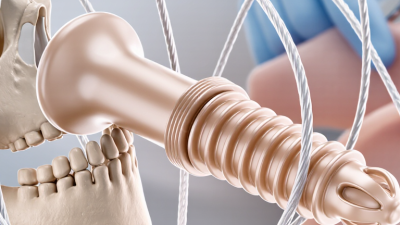
How PEEK’s ~3.6 GPa Modulus and ~100 MPa Strength Inform Anchor Design

PEEK’s reported modulus near 3.6 GPa and tensile strength around 100 MPa offer useful design reference points, not finished specifications. Values vary with grade, processing, test method, and loading direction. For a suture anchor, stiffness matters because the implant must transfer load without behaving like either a rigid metal part or a flexible thread. A number is not a design.

Geometry turns those material values into performance. A narrow neck, sharp transition, or oversized suture eye can concentrate stress, even when the polymer’s nominal strength appears adequate. Engineers assess insertion torque, pullout resistance, cyclic loading, and fatigue together. They also consider how the anchor’s thread profile engages bone. Small details matter: a rounded eyelet can reduce abrasion, while a thicker section may improve strength but require more space.

For global buyers, compare test conditions before comparing headline figures. Ask for material traceability, dimensional tolerances, sterilization compatibility, and test data for the complete anchor—not only raw PEEK. Results from one configuration may not transfer to another. That distinction is easy to miss. And published values can sound more certain than they are; actual performance depends on design, manufacturing consistency, and the intended use environment.

7 Best PEEK Suture Anchor Solutions for Global Buyers - How PEEK’s ~3.6 GPa Modulus and ~100 MPa Strength Inform Anchor Design

Design solution Typical configuration How PEEK properties inform design Potential application fit Buyer evaluation points Key trade-off
1. Threaded solid PEEK anchor Solid body with external threads and one or more suture eyelets or passages. PEEK’s typical unfilled-material tensile modulus is about 3.6 GPa, with tensile strength often around 90–100 MPa depending on grade and test conditions. Thread-root geometry and eyelet margins should be designed to manage local stress. General soft-tissue fixation where a screw-in anchor format is appropriate for the bone and procedure. Review insertion torque, thread profile, eyelet edge finish, suture compatibility, and performance in the intended bone model. Thread engagement can provide fixation, but insertion technique and bone quality affect performance.
2. Vented or cannulated PEEK anchor Threaded or press-fit body with a central or lateral opening intended to provide a pathway through the anchor. Openings reduce the available cross-section. Their size, placement, and edge radii should be assessed against the material’s strength and the loads transferred through the anchor. Cases where a cannulated insertion approach or a defined passage through the implant is part of the system design. Check the actual insertion instrument, remaining wall thickness, passage dimensions, and validated pullout and suture-retention results. Additional pathways may support delivery features but can reduce the load-bearing section.
3. Small-diameter PEEK anchor Compact threaded or press-fit body intended to use a smaller bone socket than a larger anchor design. High stiffness relative to many soft tissues supports a stable implant body, but reduced diameter leaves less material around threads, holes, and suture paths. Procedures where bone preservation or limited available space is an important design consideration. Compare insertion requirements, bone-socket dimensions, anchor geometry, and test data for the specific size offered. A smaller footprint may preserve bone, but fixation capacity cannot be inferred from size or material data alone.
4. Double-loaded PEEK anchor Anchor designed with two suture strands or suture limbs; exact loading configuration varies by system. Multiple suture paths can concentrate forces at eyelets and openings. The anchor body and suture-contact surfaces require evaluation under the intended loading configuration. Repairs requiring more than one suture limb from a single anchor location. Verify the number and type of sutures, loading instructions, suture abrasion testing, and whether reported strength applies to the complete construct. More suture options may increase repair flexibility, while increasing complexity at the anchor’s suture paths.
5. Knotless PEEK anchor PEEK anchor body used with a locking, tensioning, or suture-retention feature; the mechanism is device-specific. Anchor stiffness and strength support the body, while the locking interface and suture path govern important parts of the assembled system’s performance. Repairs designed to secure sutures without tying a conventional knot at the anchor. Assess the full deployment sequence, tensioning method, locking reliability, suture compatibility, and validated construct testing. Can simplify the fixation sequence, but performance depends on the complete locking mechanism and correct deployment.
6. Tapered PEEK anchor Body with a gradually changing diameter, commonly paired with a threaded or insertion-based fixation design. A taper changes how load is distributed along the body. Transitions should avoid abrupt changes that could create stress concentrations, particularly near openings and thread runouts. Applications where the intended insertion path or anchor geometry favors a tapered profile. Review dimensional drawings, insertion depth guidance, bone-model data, and the effect of the taper on the intended fixation method. Geometry may aid a particular insertion concept, but taper alone does not establish stronger fixation.
7. PEEK anchor with a multi-directional suture path Anchor body with more than one suture passage or a configuration intended to route sutures in different directions. Each passage changes the local cross-section and contact geometry. Rounded, well-finished paths and adequate material around openings are important design considerations. Repairs requiring alternative suture routing or multiple fixation directions from one anchor site. Confirm permitted suture routing, passage dimensions, abrasion and fatigue testing, and the applicable instructions for use. Routing flexibility may be useful, but additional openings can increase design and verification demands.

Material and selection note: The approximately 3.6 GPa modulus and approximately 100 MPa strength are representative values for unfilled PEEK, not guaranteed specifications for every implant-grade formulation or finished anchor. Values vary with grade, processing, specimen orientation, conditioning, and test method. These are generic design categories—not a ranked list of commercial products. Select an anchor using device-specific validation, procedure requirements, applicable regulatory documentation, and the manufacturer’s instructions for use.

Seven PEEK Suture Anchor Solutions Compared by Fixation Type and Use

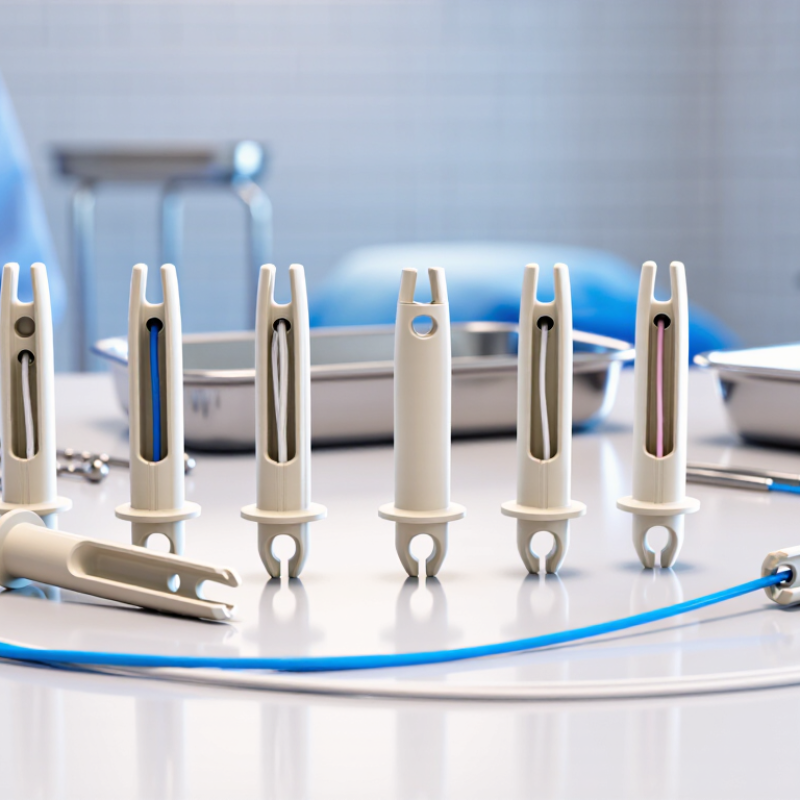
Seven PEEK suture anchor solutions differ by how they engage bone and manage sutures. Threaded screw-in anchors provide mechanical purchase and may suit denser bone, depending on technique. Knotless screw-in designs secure sutures without tying knots at the repair site. Push-in anchors use a press-fit approach and can simplify insertion, but bone quality matters. Vented designs include openings in the anchor body; surgeons should assess whether the specific pattern suits the intended repair.

Suture configuration creates another useful comparison. Single-loaded anchors carry one suture strand or pair, while double-loaded versions provide additional suture options for broader tissue capture. Small-diameter anchors may help when space is limited, though handling and fixation still require evaluation. These categories can overlap: a threaded anchor might also be knotless or double-loaded. There is no universally best choice. A familiar design may feel easier, but that alone does not prove it fits every case.

Tips: Match anchor diameter, insertion method, and suture configuration to the procedure and bone conditions. Ask suppliers for material specifications, validated performance data, sterilization details, and clear instructions for use. Check compatibility with the intended instruments. Small differences matter. A product comparison can miss practical details, so review samples and documentation with qualified clinical and procurement teams before purchasing.

Key Buying Metrics: Anchor Diameter, Suture Configuration, and Surgical Site

Anchor diameter is not a “bigger is better” decision. Tingart et al. studied humeral anchors in a 2004 Journal of Bone and Joint Surgery paper. Their biomechanical tests compared 3.5- and 5.0-mm anchors and linked pullout strength to local bone mineral density. Bone quality matters. When comparing PEEK options, request fixation data for the intended bone and insertion site. Do not compare peak-load figures alone. A larger pilot hole may limit placement choices in a narrow footprint. Bench results cannot predict every patient outcome.

Grand View Research valued the global orthopedic implants market at USD 49.4 billion in 2022 and projected 4.9% annual growth through 2030 in its Orthopedic Implants Market report. That broad estimate signals procurement scale, not demand for PEEK anchors specifically. Compare suture configurations against the repair plan: single- or double-loaded, round suture or tape, and knotted or knotless. Shoulder labral work involves the glenoid; rotator-cuff fixation targets the greater tuberosity. Hip and foot-and-ankle procedures bring different access angles and load paths. Fit matters. Ask suppliers for site-specific dimensions, suture strength data, and validation reports. A catalog match is only a starting point; surgical technique and patient anatomy still require review.

Global Sourcing Checklist: Regulatory Compliance, Sterility, and Traceability

7 Best PEEK Suture Anchor Solutions for Global Buyers
Global Sourcing Checklist: Regulatory Compliance, Sterility, and Traceability

When comparing PEEK suture anchor solutions, buyers should assess documented controls, not just product specifications. Confirm the device’s intended market, applicable registration status, and quality-system documentation. Requirements differ across jurisdictions. A supplier’s certificate is useful, but it does not replace checking the scope, issuing body, and current validity.

Sterility needs evidence tied to the exact product and packaging configuration. Request the validated sterilization method, cycle records, packaging validation, and lot-specific release documents. For ethylene oxide or radiation processes, review the relevant validation standards and confirm that changes trigger reassessment. WHO’s Global Patient Safety Report 2024 estimates that 1 in 10 patients experiences harm in healthcare, reinforcing the importance of controlled processes. Details matter.

Traceability should connect each anchor to its raw-material records, production lot, sterilization batch, and distribution history. Check whether labels carry required device identifiers in each destination market, and test whether the supplier can retrieve records promptly. The OECD’s 2017 patient-safety report estimates that treating safety failures accounts for 15% of hospital activity and expenditure in OECD countries. A tidy dossier can still conceal weak links. Ask for a sample traceability exercise, then see where the records slow down.

volume-unmute-yellow-icon volume-unmute-blue-icon