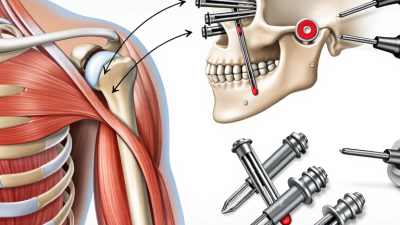
China Best Meniscus Repair Systems for Global Buyers?

For global buyers, choosing Meniscus repair systems is not just a price comparison. The device must match the tear pattern, surgeon technique, and hospital workflow. A needle that passes smoothly through a tight joint space matters. So do implant security, deployment consistency, and clear instructions. Small details can change the operating-room experience.

The American Academy of Orthopaedic Surgeons’ 2024 Clinical Practice Guideline on acute isolated meniscal pathology supports preserving functional meniscal tissue when appropriate. It also highlights that treatment decisions depend on patient and injury factors. Meniscus specialist Robert F. LaPrade, MD, has emphasized the same principle in his published work: preserve functional tissue whenever clinically appropriate. That is a guiding principle, not a promise of outcome. Public market reports often group these products within broader orthopedic-device categories, so their estimates may not provide reliable brand-level comparisons. Buyers should check the source, date, and scope of each figure.

For procurement teams, compare repair methods, implant materials, instrument ergonomics, training support, and traceable quality documentation. Request product specifications and evidence for the intended use. Then assess how the system fits local clinical practice. Not every feature earns its cost. A careful review may reveal gaps in the available data, and that deserves attention—not guesswork.
China Best Meniscus Repair Systems for Global Buyers?

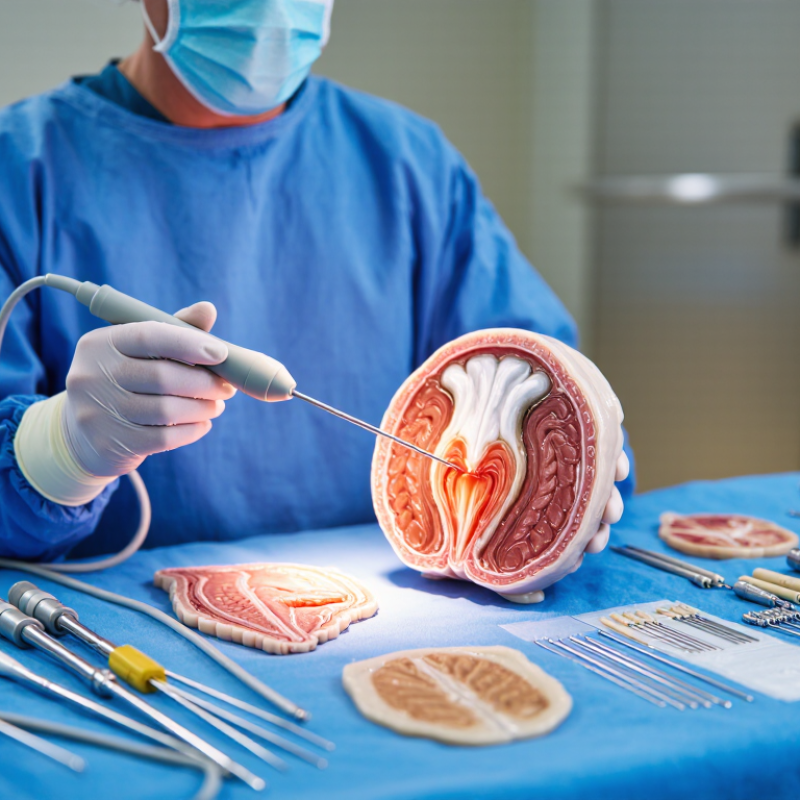
Meniscus Repair Basics: Vascular Zones and the Outer 10–30% Blood Supply

Meniscus repair decisions begin with blood supply. The outer red-red zone receives the strongest vascular input, while the inner white-white zone has little direct supply. The red-white region lies between them. A classic human-tissue study by Arnoczky and Warren (1982) estimated vascular penetration at roughly 10–30% of meniscus width. This is a useful guide, not a fixed boundary. Age, tissue condition, and individual anatomy can shift the pattern.

For global buyers comparing repair systems, zone matters as much as device design. Peripheral tears may have better healing potential because blood-borne cells and nutrients can reach the repair site. Central tears face a tougher environment. Yet location alone cannot predict success. Tear shape, stability, chronicity, and patient factors also influence clinical judgment. A neat diagram can make the border look exact. Real tissue is less tidy.

Tips: Check whether product training explains zone assessment and tear selection. Ask for peer-reviewed clinical evidence, not only bench testing. During evaluation, compare needle access, implant placement, and handling in narrow spaces. Small details matter. Surgeons should make treatment decisions using current evidence and patient-specific assessment.
Three Core Techniques: All-Inside, Inside-Out, and Outside-In Repair

China Best Meniscus Repair Systems for Global Buyers?
Three Core Techniques: All-Inside, Inside-Out, and Outside-In Repair

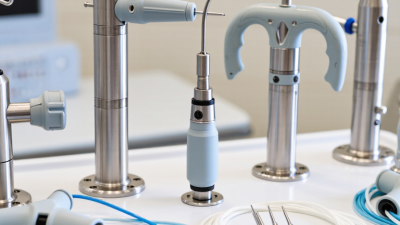
Meniscus repair systems vary by access route, instruments, and the tear patterns they can address. All-inside repair places fixation devices through the arthroscope, often helping limit additional incisions. It can suit selected tears, especially in the posterior meniscus. But device placement and implant position require careful judgment. Inside-out repair passes sutures through the joint and out through a small incision. It offers flexible suture placement, though protecting nearby nerves and vessels requires experience. Outside-in repair brings sutures from outside the joint, making it useful for many anterior tears. The approach may be less convenient for some posterior locations. Fit matters.

For global buyers, compare complete instrument sets, needle lengths, suture options, and compatibility with the intended surgical workflow. Ask for clear instructions, material details, sterilization information, and evidence supporting product performance. A catalog photo cannot show how instruments handle in a wet operating field. Nor can one technique suit every tear. Surgeon training, tear location, tissue quality, and patient factors all influence selection.

Tips: Request a hands-on evaluation where appropriate. Check that the set supports the team’s preferred technique and includes the small components needed during surgery. Confirm documentation before procurement. Even a well-designed system has limits.

China Best Meniscus Repair Systems for Global Buyers?

Three Core Techniques: All-Inside, Inside-Out, and Outside-In Repair

The chart compares whether a separate protective incision is typically used in addition to standard arthroscopy portals. Inside-out repair commonly uses an accessory incision to retrieve and protect sutures. All-inside repair generally avoids one, while outside-in repair typically uses percutaneous needle entry rather than a separate protective incision. Actual approaches depend on tear location, patient anatomy, and surgeon preference; this is not a comparison of clinical outcomes.

System Comparison: Implant Materials, Deployment, and MRI Compatibility

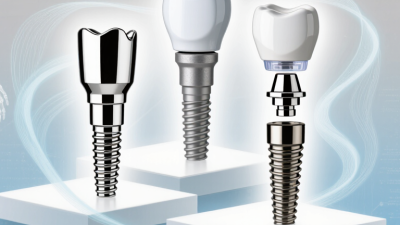
Comparing meniscus repair systems means looking beyond an implant’s headline material. Common designs use sutures with small polymer or bioabsorbable anchors; others rely mainly on suture-based fixation. Material choice can affect handling, fixation, and how much hardware remains in the knee. Yet no material suits every tear. Surgeons consider tear location, tissue quality, and access when selecting a construct. That judgment is highly case-specific.

Deployment changes the workflow. All-inside systems place fixation arthroscopically, while inside-out and outside-in methods pass sutures through different access routes. Instrument reach, portal position, and protection of nearby structures deserve careful review. MRI compatibility also needs device-level verification, not assumptions based on a material name. Check current instructions for use and MR labeling for scan conditions and image-artifact notes. Metal content, geometry, and imaging sequences can influence visibility. Details matter. An MR-conditional label may not answer every practical imaging question. Evidence and local experience can differ, and that uncertainty should be stated plainly. Not always.

China Supplier Checks: ISO 13485:2016, Sterility, and Traceability

China can supply meniscus repair systems, but supplier review should begin with the quality system, not the price sheet. The ISO Survey 2022 recorded 36,966 valid ISO 13485 certificates worldwide. This shows broad adoption, not that every certified site makes every device well. Check that the certificate is current and covers the actual manufacturing location and relevant product scope.

Ask for sterilization validation and routine release records. Match the method to the device: ethylene oxide, radiation, and moist heat require different controls. Review applicable evidence against standards such as ISO 11135, ISO 11137, or ISO 17665. For sterile packaging, request validation records aligned with ISO 11607. Check seal integrity, expiry dating, and transport protection. Do not accept a certificate PDF alone.

Traceability should connect each kit to its component lots, assembly records, sterilization load, and release decision. For a meniscus repair kit, follow the anchor, suture, and inserter through the paperwork. Then ask the supplier to demonstrate a mock lot search. A neat audit file can still hide weak shop-floor habits. That matters. I would also check how deviations are investigated; this step is easy to rush, and sometimes the records reveal more than the presentation.

Global Market Access: FDA 510(k), EU MDR 2017/745, and Clinical Evidence

For global buyers, regulatory access is part of system performance. FDA 510(k) clearance indicates substantial equivalence to a legally marketed predicate; it is not proof of superior clinical outcomes. Review the FDA decision summary for intended use, device materials, and testing. Small details matter.

The EU route is different. Under Regulation (EU) 2017/745, manufacturers need a clinical evaluation supported by relevant clinical data, with post-market follow-up where appropriate. A CE mark is not interchangeable with FDA clearance. Buyers should check the certificate’s scope, the device’s intended use, and whether the evidence covers the actual repair technique. The European Commission’s MDR framework makes traceability and ongoing evidence central, not optional paperwork.

Evidence must fit the claim. The American Academy of Orthopaedic Surgeons’ 2024 guideline on acute isolated meniscal pathology emphasizes preserving meniscal tissue when feasible, but it does not validate every repair system. Grand View Research estimated the broader global orthopaedic devices market at USD 48.6 billion in 2023; that figure signals commercial scale, not meniscus-specific demand. Ask for study populations, follow-up duration, failure definitions, and adverse-event reporting. A polished brochure is not clinical evidence. Real-world data can still be uneven, especially across different tear patterns and surgeon experience. That gap deserves scrutiny.

volume-unmute-yellow-icon volume-unmute-blue-icon