Companies


Browse products by medical specialities area or therapies

Arthroplasty
Product by Therapies
Product by Type
Sports Medicine
Product by Therapies
Knee Portfolio - ACL /PCL Reconstruction
Knee Portfolio - Meniscus Repair
Shoulder Portfolio - Bankart/Slap Repair
Shoulder Portfolio - Rotator Cuff Repair
Product by Type


Knee and hip motion restoration devices can help people work on stiffness, range of motion, and gentle movement at home or during rehabilitation. The options are not interchangeable. Some provide continuous passive motion, while others support active pedaling or controlled stretching. As orthopedic surgeon Howard Luks, MD, puts it, “Motion is lotion.” The phrase is memorable, but it is not a treatment plan. Your diagnosis, surgical instructions, pain level, and mobility goals should guide device selection.
Small gains matter. A few degrees of movement may make getting into a car or climbing stairs feel less difficult. Still, a machine cannot guarantee recovery, and more movement is not always better. A device that feels helpful to one person may aggravate another person’s symptoms. Ask your physical therapist or surgeon about safe motion limits, session length, and warning signs before use. Check that controls are easy to reach, straps fit securely, and the frame suits your space. These details are less exciting than advertised features, but they can shape everyday use.
This guide compares seven Knee and hip motion restoration devices, including what each is designed to do and where it may fit into rehabilitation. It also considers comfort, adjustability, and practical limitations. No single pick suits everyone. That is worth remembering. A device can support consistent practice, but it cannot replace an individualized recovery plan or professional assessment.
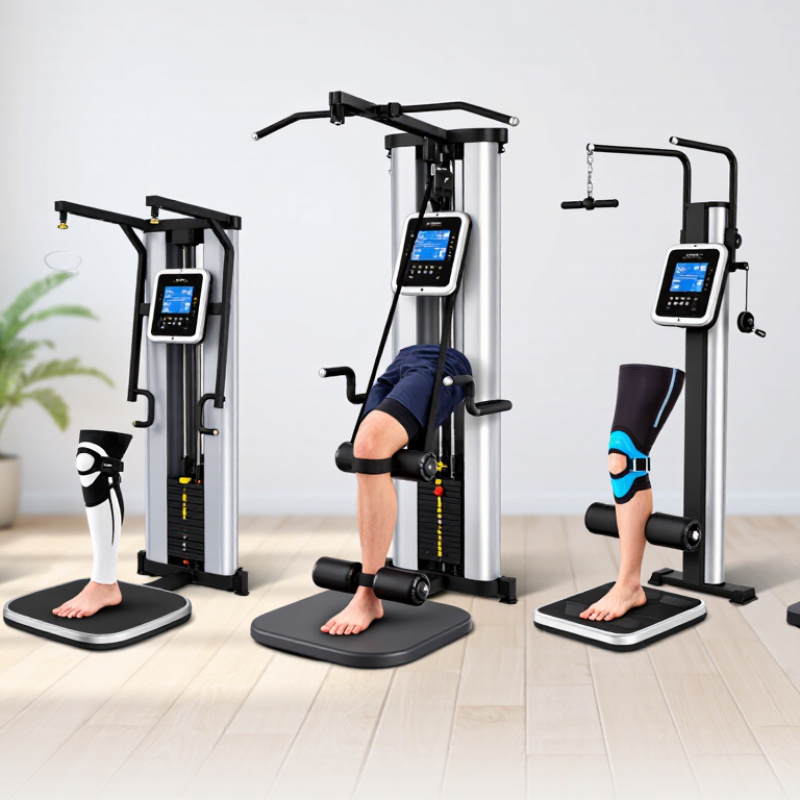
Motion-restoration devices can help patients practice movement when pain, swelling, or weakness makes ordinary exercise difficult. A continuous passive motion (CPM) unit slowly bends and straightens the knee while the user lies supported. Other systems assist guided knee or hip movement, helping people rehearse a comfortable range without bearing full weight. The goal is measured motion, not forcing a joint past pain.
Evidence calls for realistic expectations. A 2014 Cochrane review of CPM after knee replacement found an average improvement of about 2 degrees in active knee flexion, a small change that may not matter in daily life. The American Physical Therapy Association’s 2020 guideline advises against routine CPM use after uncomplicated total knee replacement. Devices may still have a role when a clinician identifies a specific need, but they do not replace individualized exercise, strength work, or regular reassessment. A smooth machine cycle is not proof of recovery.
Fit and routine matter. A device should support the joint without pinching skin, pulling at an incision, or increasing pain; users should follow their care team’s settings and stop if symptoms worsen. The World Health Organization’s 2019 estimates report that 528 million people lived with osteoarthritis worldwide, including 365 million with knee osteoarthritis. That burden makes accessible rehabilitation important, though one device cannot suit every body or recovery. Progress can feel uneven. A patient may gain motion one day and lose some after swelling returns. The plan needs room for that reality.
7 Best Knee and Hip Motion Restoration Devices - How Knee and Hip Motion-Restoration Devices Support Rehabilitation
A practical comparison of device types used to support movement, strength, and functional mobility during knee or hip rehabilitation. Suitability depends on the procedure, diagnosis, healing stage, and clinician guidance.
| Device type | How it supports movement | Common rehabilitation use | Key considerations |
|---|---|---|---|
| Continuous passive motion (CPM) machine | Moves the knee through a preset range while the user remains relaxed. | May be prescribed after selected knee procedures when a clinician wants supported, repetitive motion. | It does not replace active exercise or walking. Routine use after uncomplicated knee replacement is not generally required; follow the treating team's protocol and prescribed range. |
| Motor-assisted cycle ergometer | Provides assisted or low-resistance pedaling to help practice repeated knee and hip flexion and extension. | Useful when independent pedaling is initially difficult or when a controlled, low-load movement session is appropriate. | Seat position, range, assistance, and resistance should be adjusted to comfort and clinical instructions. Stop if movement causes sharp or increasing pain. |
| Recumbent stationary bike | Allows repetitive cycling with the back supported and body weight off the feet. | Often used to build comfortable range of motion and endurance as recovery permits, including in many knee and hip exercise programs. | Begin with a seat position that allows a comfortable pedal stroke and little or no resistance. The ability to complete a full revolution depends on available joint motion. |
| Seated pedal exerciser | Provides low-impact, short-range pedaling from a chair or wheelchair. | Can offer a compact option for gentle movement practice when mounting a full-size bike is inconvenient. | Use a stable chair and secure the unit to prevent it from sliding. It may not provide the same positioning or resistance control as a clinical ergometer. |
| Adjustable-resistance stationary bike | Combines repeated joint movement with adjustable resistance for progressive conditioning. | May support endurance and strengthening later in rehabilitation, once the user can pedal comfortably and has clearance to increase load. | Resistance should be progressed gradually. A high seat and low initial resistance can reduce the demand on the knee; follow clinician advice for hip precautions. |
| Body-weight-support treadmill | Uses a harness system to reduce some of the load placed through the legs during supervised walking practice. | Can help selected patients practice gait, step timing, and walking endurance when full weight-bearing is difficult. | Typically requires trained supervision and suitable equipment. The amount of support and walking speed must be set for the individual and any weight-bearing restrictions. |
| Robotic gait-training system | Guides or assists repeated stepping while providing structured support and feedback. | Used in some specialist rehabilitation settings to practice walking when neurological or mobility limitations affect gait. | Availability and treatment protocols vary. It is not necessary for every knee or hip rehabilitation program and does not replace individualized assessment or functional practice. |
Safety note: Device choice, motion range, weight-bearing, and exercise intensity should be guided by a qualified healthcare professional. Follow post-operative precautions and stop to seek advice if you experience severe pain, unusual swelling, or other concerning symptoms.